The Glass Box: Why I’m Building Therapy Tools That Explain Themselves
Twenty years ago I was a child therapist with a robot on the table. We built behaviors together — the robot does this when he gets angry; what do you do? The robot was never the therapy. The robot was the window. I have been thinking about that window for two decades, and now that AI is walking into therapy rooms everywhere, I think my field is about to get it exactly backward.
The fifty-first date
There’s a film where a man falls in love with a woman whose memory resets every night, so he wins her again every morning. Clinicians laugh at that film differently, because the weekly session is quietly the same scene. I see one hour of a client’s week — less than one percent of their life — and we spend the first part of every session doing archaeology on the other 167 hours, working from whatever distress made memorable. The richest data stream in mental health care, a week as it was actually lived, vanishes at my office door. It has always vanished. We have simply agreed not to mention it.
The black box walks in
The industry’s answer is arriving fast: record the session, let an AI listen, let it tell the therapist what mattered. Set aside how that feels — there’s a harder problem. When a clinician asks one of these systems why it flagged rising anxiety, the fluent explanation it produces is generated by the same opaque process that produced the flag. The research on this is not ambiguous: a large language model’s account of its own reasoning is a plausible story, not a faithful one. So the therapist is handed an insight she cannot verify, wrapped in an explanation she cannot trust, about a person to whom she owes informed consent. I am a clinician. That is not a tool. That is a liability with a subscription fee.
We never built one
Here is the thing I eventually understood about my own work: therapy already owns the solution, and it’s older than the software. It’s the instrument — the thought record, the urge log, the exposure ladder. A century of devices that turn inner experience into structured, readable, theory-grounded data. Their explanation isn’t bolted on afterward; it is their shape.
When a client of mine completes a thought record on their phone — the situation, the automatic thought at 70% belief, the distortion named, the evidence weighed, the reframe, the belief landing at 30% — nothing about that needs to be inferred by a machine or taken on faith. Any trained clinician reads it in four seconds and can reconstruct exactly what therapeutic work happened. When AI then organizes a week of those entries for me — practiced twice, both after workplace evaluations, forty-point average drop — every clause points back to entries I can open. The explanation is the data’s native shape. Glass, not black.
I’ve started calling the framework built on this idea XAI Therapy™ — explainable AI–assisted therapy. One commitment underneath all of it: we don’t explain a black box after the fact. We never build one.
The part that had to come from the story
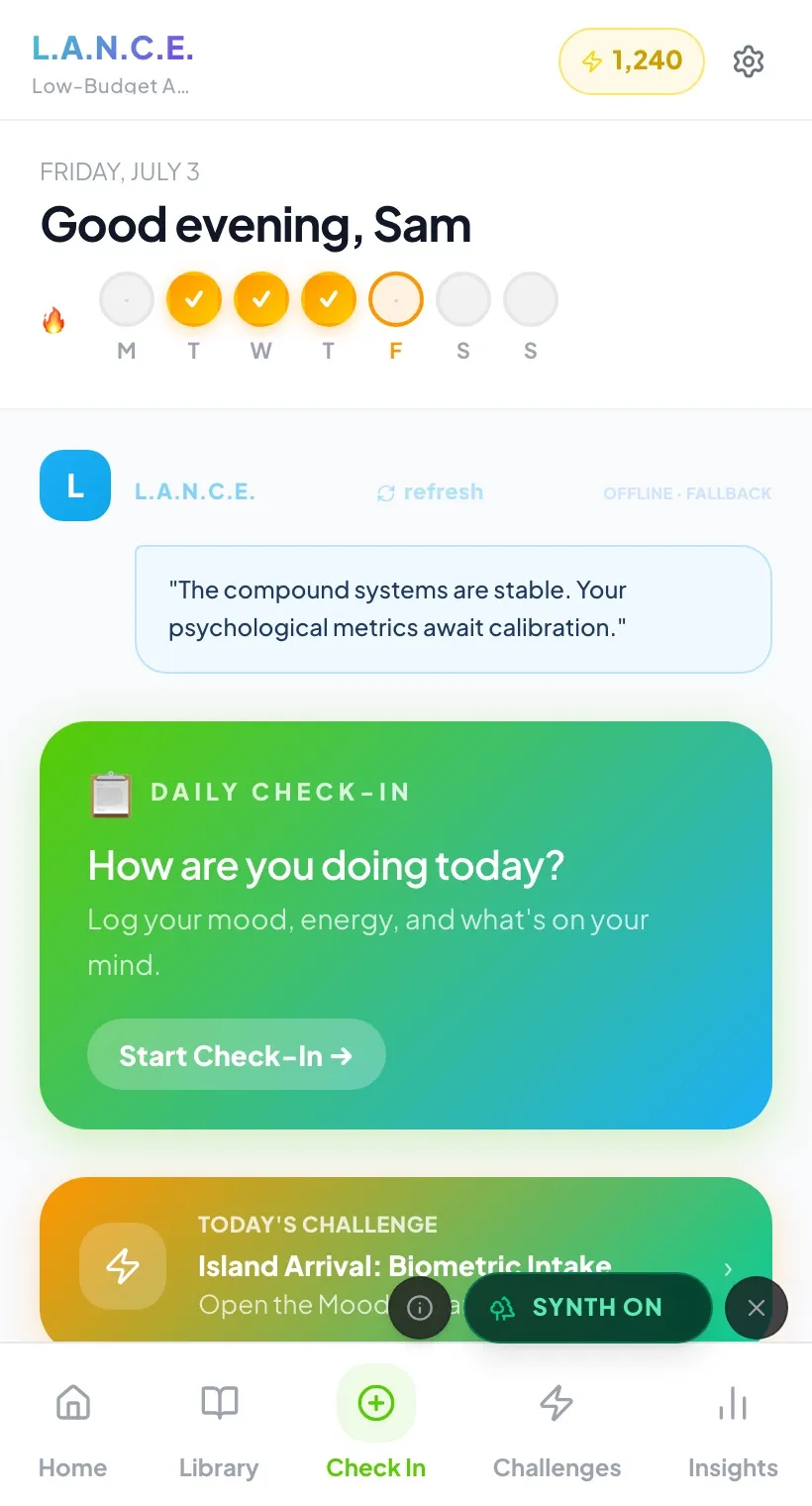
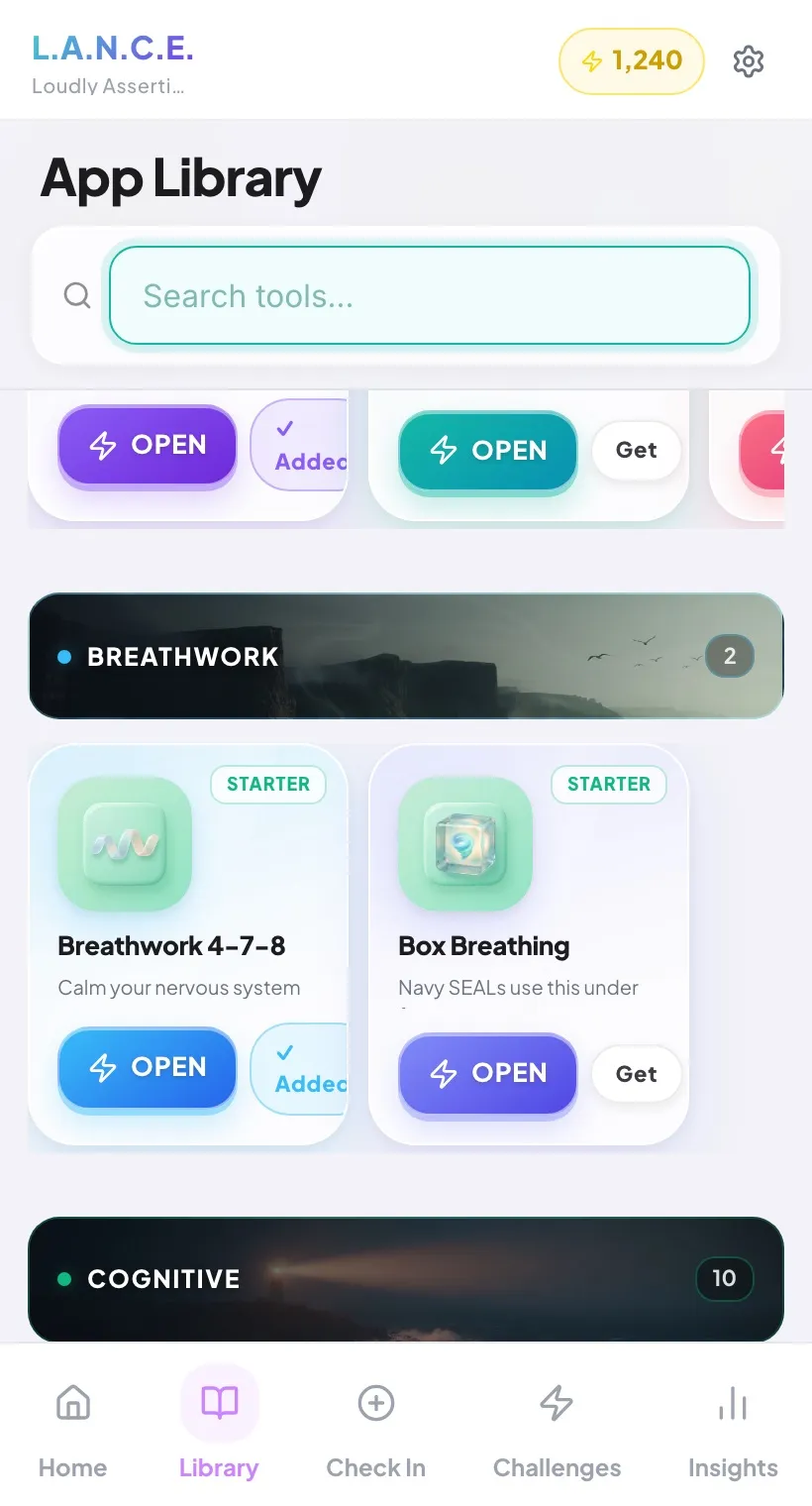
None of this works if the client won’t open the app, and nobody falls in love with a drawer of worksheets — I wrote about that when I built the voyage. So the tools live inside stories: an island, a ship, a crew of imperfect robots. The story pulls a person to the one tool they need on a Tuesday. And because the tools are instruments, what comes back to me isn’t surveillance — it’s a logbook the client chose to keep, that belongs to them, that we finally get to read together. Even the timing tells the truth: homework done Tuesday morning and homework done an hour before session are different clinical facts, and for the first time in my career I get to know which one happened.
What I’ll claim, and what I won’t
Because the whole point is transparency, let me practice it. I will claim: these are real clinical frameworks; the data is structured and readable; a licensed human reviews everything before it touches care; the client owns their record; and the AI’s role is organizing and drafting, in the open, with citations — never deciding. I will not claim outcomes I haven’t measured. There are no efficacy statistics in this post because none exist yet; I’ve drafted the studies that would earn them, with conditions under which my own framework fails. A transparency standard that fudges its own launch numbers would be a joke that writes itself. Also, plainly: none of this is a crisis service, and it doesn’t diagnose — it goes to the therapist, who remains the therapist.
The robot does this. What do you do?
The kids I worked with two decades ago never confused the robot for the point. The robot was how the hard thing became discussable. That is the whole job description of AI in therapy, as far as I’m concerned: make the invisible week discussable. Amplify the human in the room. Explain yourself or leave.
The most human profession is currently being offered the least explainable technology. The choice isn’t whether AI enters the room — it’s whether we accept machines we must trust, or insist on machines we can be shown. I know where I stand. I’ve been standing there since the robot was small enough to fit on a table.
The tools live in the companion app and pair to the clinician’s cockpit my own practice runs on. If you’re a therapist and any of this is the itch you couldn’t name, I would genuinely like to hear from you.
— Lance Nabers, LPC · 25 years in the room, and counting
Ready to take the first step?
Free 15-minute consultation. Most clients are scheduled within 48 hours.