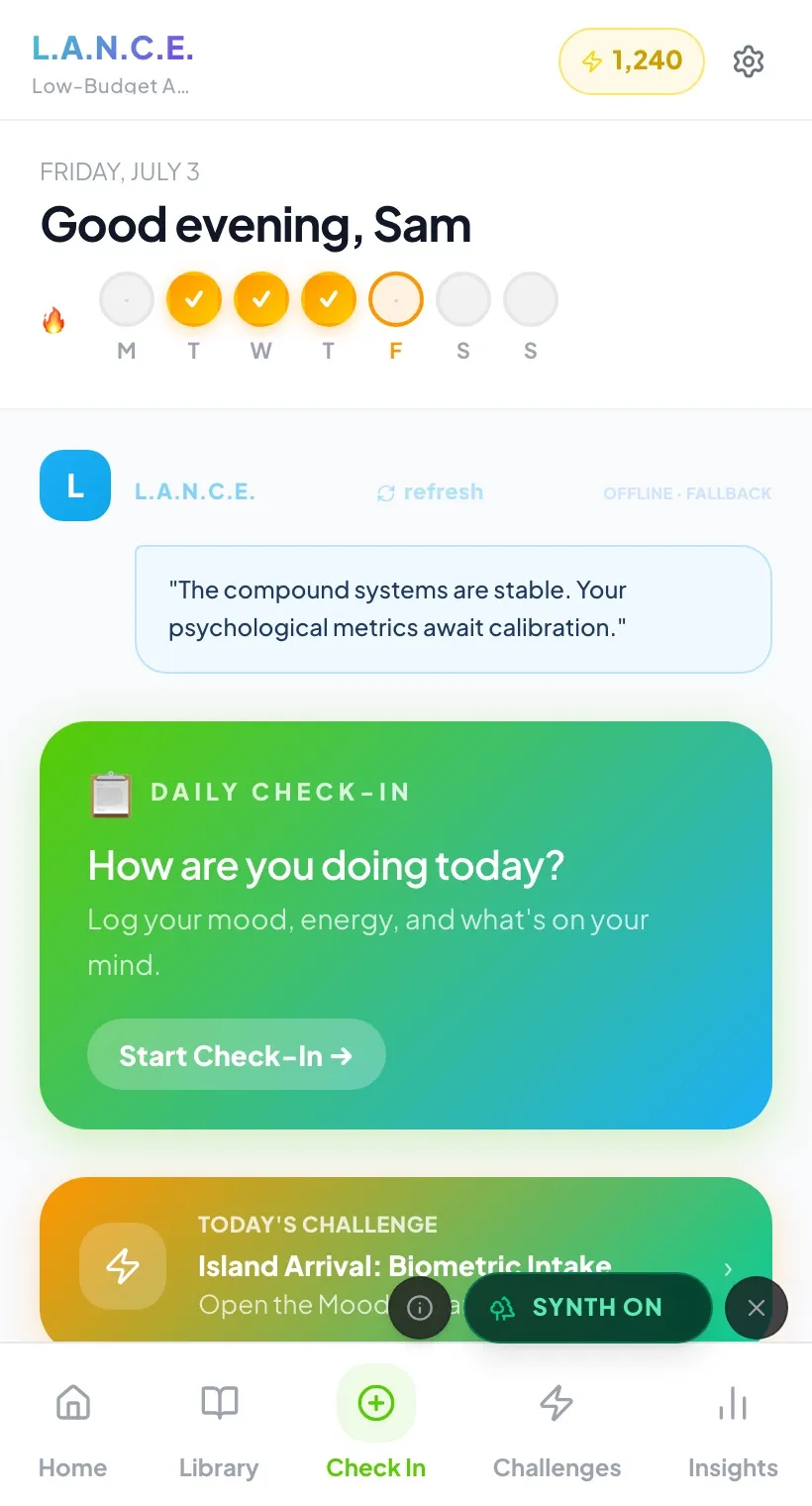
The Second Sea: Why I Built a Recovery App Shaped Like a Voyage
I have spent twenty-five years sitting with people in recovery, and a good part of my free time forty feet under the ocean on one breath. It took me embarrassingly long to notice those were the same discipline.
The worksheet problem
Every clinician who works with addiction owns the same drawer: urge logs, trigger maps, HALT checklists, thought records. The tools work — decades of evidence say so. What doesn’t work is the drawer. Handing someone in early recovery a stack of photocopies and asking them to fall in love with their own healing is like handing someone sheet music and calling it a concert.
For four years I ran recovery groups on a curriculum I kept refining — urge surfing, playing the tape forward, the honest weekly grade, the minus-five-to-zero scan. The material held up. The delivery was the weak plank.
Why a ship
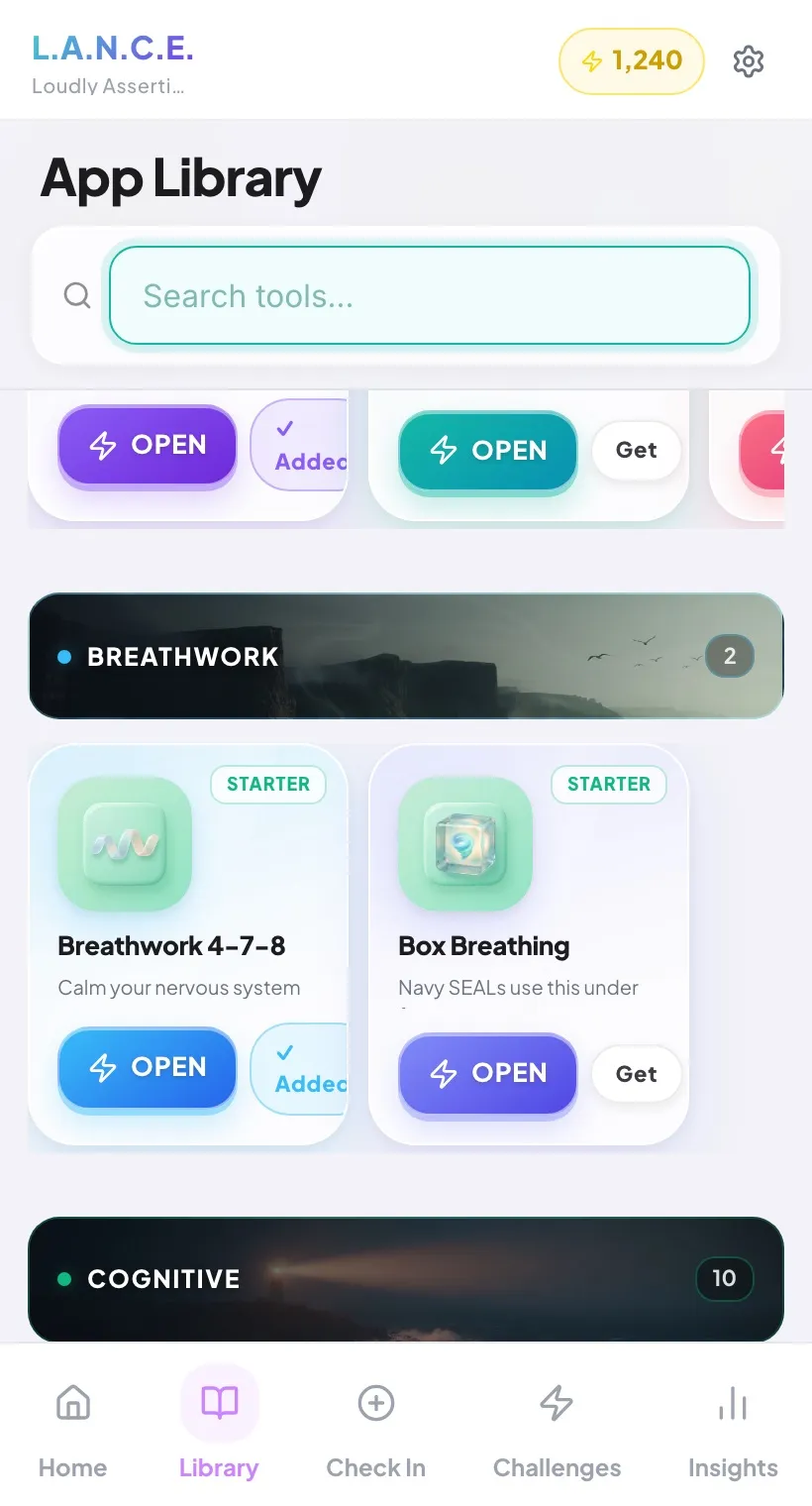
Recovery is not a room you sit in. It is open water: long stretches of boredom, sudden weather, the constant small work of keeping a heading. So when I built the app version of my curriculum, I didn’t build a dashboard. I built a voyage.
Your recovery work becomes the ship’s wake — every urge you surf, every honest check-in, a lit mark in the water behind you. The wake only grows. Turn around at the wheel on a hard night and look at how much water you have already crossed. That is not a gamification gimmick; that is the single most useful thing I have ever been able to show a person in week three of sobriety.
The crew of almosts
The ship is crewed by robots — wayward machines, each one built for love and shelved at almost. Buddy was built to remember what a sick child forgets. Tick was built to steady a failing heartbeat. None of them shipped. All of them matter anyway.
If you have ever sat in a recovery group, you already know why the crew looks like that.
The rules I wouldn’t bend
Because I am a clinician first, the app obeys laws a game studio would never write:
- The tools will answer. Reach for help and it’s there — one tap from every screen, routed to the safety plan the practice sets, and nothing — no streak, no story, no setting — can ever lock it away. We test this automatically on every change.
- Humans come first. The SOS flow offers real people — your people, screened and named — before it offers any coping tool.
- A slip never sinks the ship. Your logged work never resets, never shrinks. The wake is permanent. Shame is not a treatment modality.
- No fake anything. No invented testimonials, no miracle claims, no AI pretending to be human. The app says what it is.
The part where the therapist stays in it
The voyage pairs to a clinician’s cockpit — the same one my own practice runs on. A therapist can assign a tool from their desk, and when their client rides out an urge on a Tuesday night, the receipt lands quietly in the chart before Wednesday’s session. Between-session work stops being a mystery and becomes a shared logbook.
The freediver’s note
Underwater, the rule that keeps you alive is the same one that keeps you sober: you come up slower than you went down. Panic wants speed. Survival is paced. Every design decision in this app answers to that rule — and the sharks, when they come, are calm ones, passing at a respectful distance. You learn you can be near the thing without being taken by it.
That is urge surfing. That is also just diving.
The voyage’s story — the crew, the mystery, the sea itself — lives at lancenabers.com/voyage. The app is in closed pilots with a small group of clinicians now. If you are a therapist who works with recovery and any of this sounds like your drawer of photocopies, I would genuinely like to hear from you.
— Lance Nabers, LPC · therapist, group facilitator, freediver
Ready to take the first step?
Free 15-minute consultation. Most clients are scheduled within 48 hours.