The full story
A home for foundlings on a gray hook of Maine coast, a boy the other kids called Driftwood, and an island he built alone that is still — somehow — running. Twenty-five years later, a shipwrecked family washes up on it with nothing but each other. This is the whole crossing: five seasons, thirty-one milestones, and the village of driftwood robots waiting for them at the treeline.
— built by a therapist who has sat with a thousand families, and an AI who kept the lights on
Before the island
A home for foundlings on a gray hook of the coast, and a boy it kept the way a pocket keeps a stone. Twice a family chose him. Twice they brought him back. The other boys had a name for him after that — DRIFTWOOD — because he washed up from nowhere, because the sea throws it away. He had one thing. He had hands.
He built a boat out of the material they used to insult him — fourteen boards, copper nails taken two at a time — and sailed for an island with nothing on it, because nothing can't give you back. What he built there, alone, out of storm-wood and bottle-glass and need, is ahead of this story. It is still there. All of it. This is the part nobody tells: the island you are about to visit is somebody's whole heart, still running.
Halcyon: a bird out of an old story that could calm the sea by sitting on it. She sails out of New York in the autumn of 1954 with four hundred and eleven people, a dance band, and a swimming pool — into the best few years anybody can remember. The war is over. There is money, and nylon, and a feeling. And the people aboard have everything and are, most of them, quietly not all right — and have no language for it whatsoever, because in 1954 there isn't one.
Your family is aboard. And on the ship, they do exactly what they do at home: they come apart, politely. One at the rail. One at cards. One trailing the dance band. One counting portholes and pretending not to hear the argument warming up for its hundredth performance — the same one as always, in nicer clothes. Same vessel. Separate rooms.
It comes over the horizon like a decision. The sky goes green-black — and the sea opens on a reef that is on no chart. No chart, because the only man who ever found the island it guards had nobody to tell.
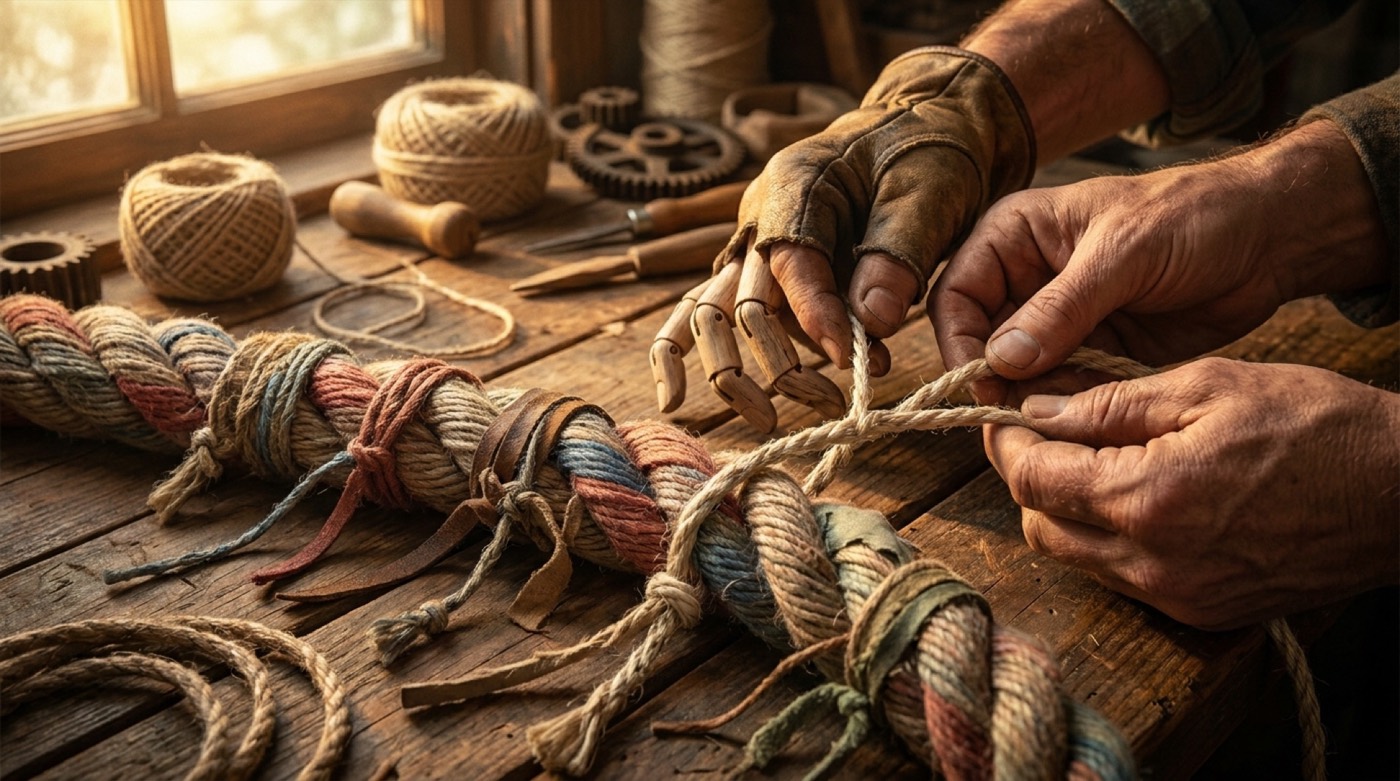
LIFE JACKETS. NOW. In the crush of the boat deck, weathered hands — a steward's, a stranger's, a father's, nobody ever agrees whose — lash your family's hands to one rope, hand over hand over hand. "HOLD THE LINE. Not the rail — EACH OTHER. Whatever the sea takes, it does not get to take the LINE—" Lightning. The funnel groaning. The water coming up to meet you.
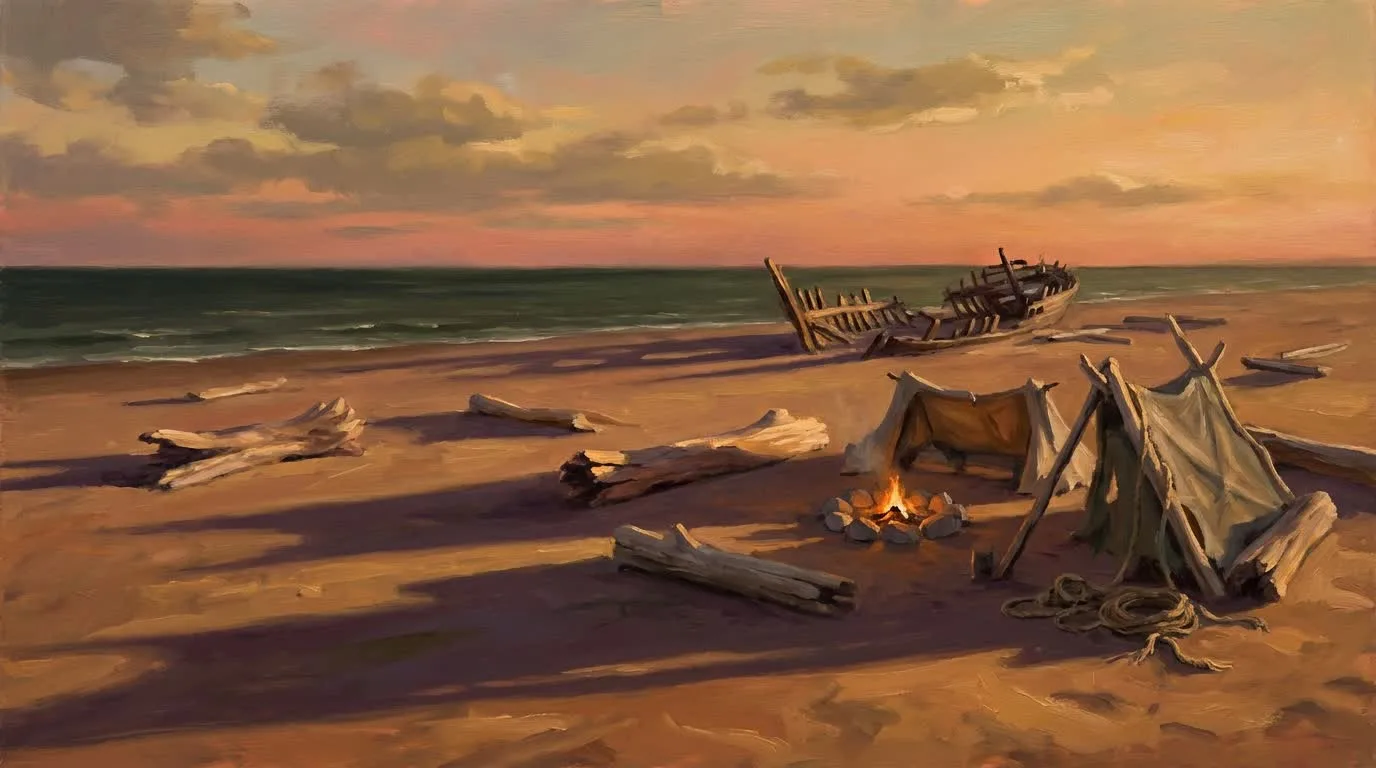
Sand. Rain-light. The sound of a sea pretending nothing happened. The family wakes scattered down one shoreline — soaked, bruised, alive, still holding one rope with no ship on the end of it. They count heads the way you count when you cannot breathe until the number is right. The number is right. All of them. And down the beach, other shapes stirring — a handful of the saved, waking on the same sand.
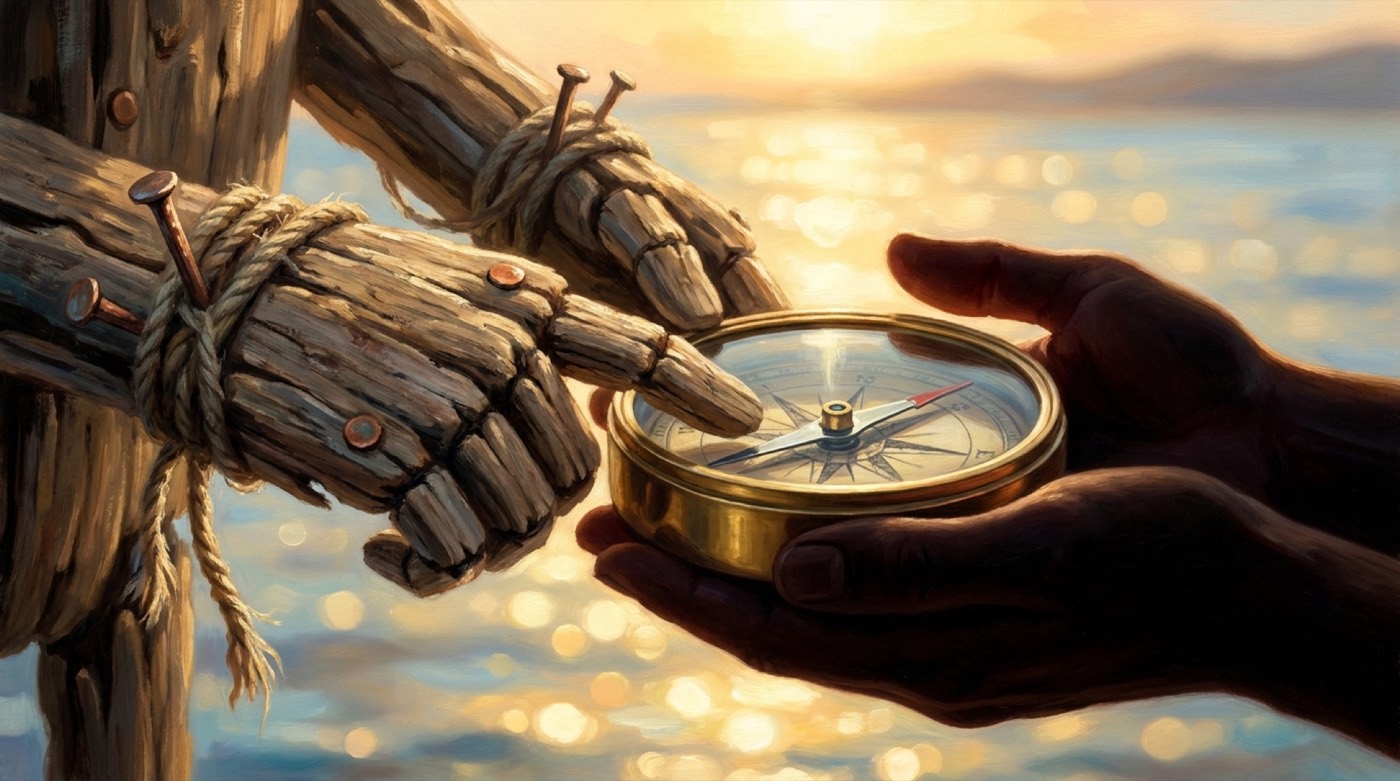
The Halcyon is gone. What washes up in the tide junk, glinting, is a brass compass — heavy, old, its casing worked by hand, by somebody who loved it. The needle does not point north. It points INLAND, toward the jungle, steady as a held breath. And from the treeline — small, wooden, gone the second anyone looks — something watches the family count heads.
Season one · THE WRECK
safety & co-regulation
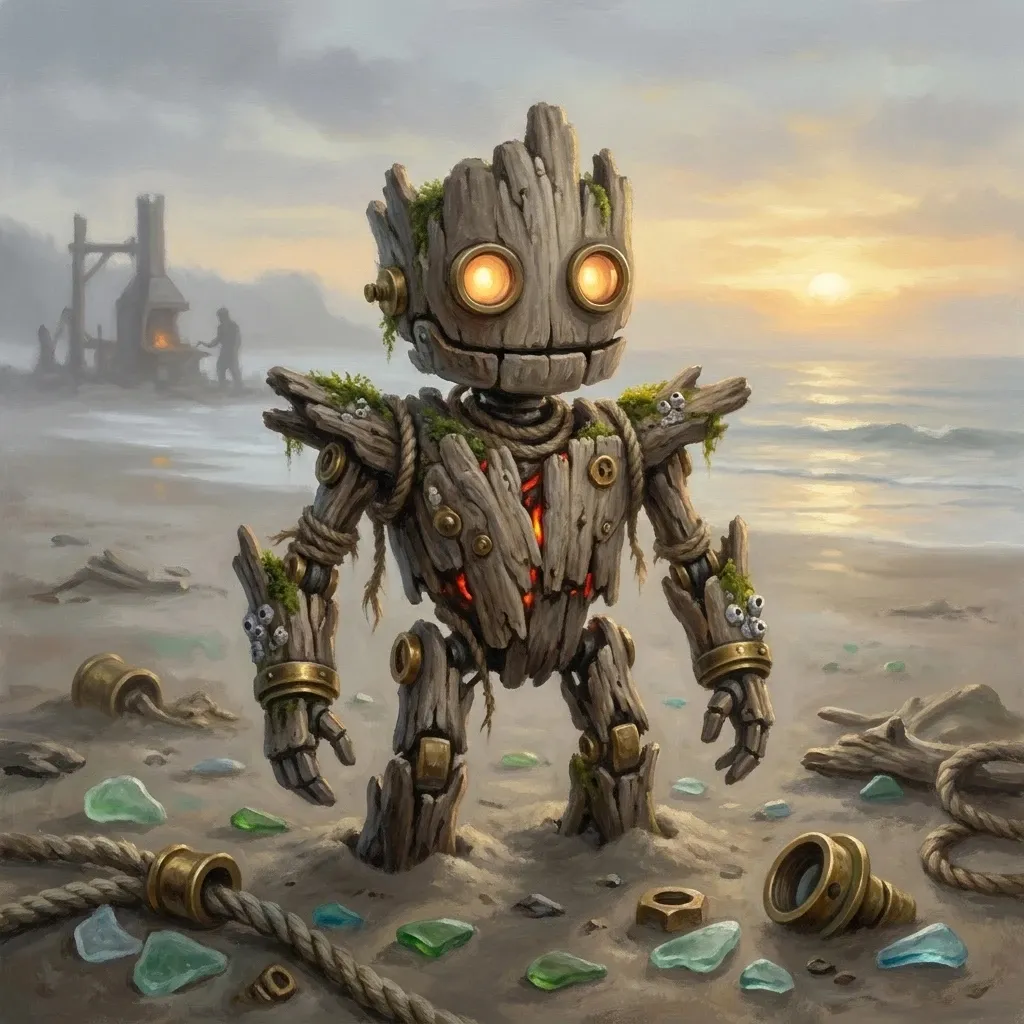
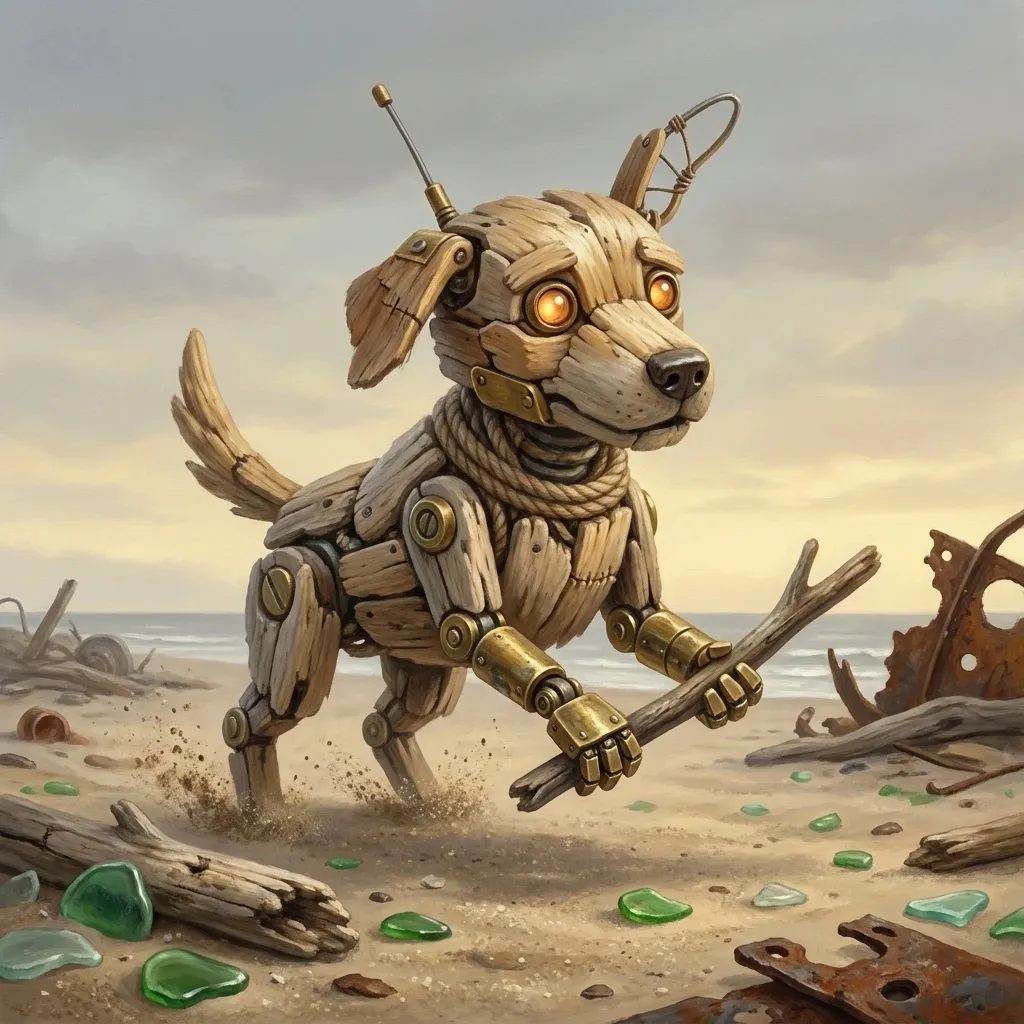
Day one on the shore, the family meets a piece of driftwood that stands up, screams, and turns out to be more scared of them than they are of it. Skip — ninety percent driftwood, ten percent regret — delivers the Jumble's verdict: they watched the family shout at each other on the beach, and a family that talks to each other like weather is a storm. The Jumble doesn't help storms. It's not wrong. Six milestones stand between that verdict and the first real fire.
"The Jumble does not help storms. And a family that talks to each other like weather… is a storm. I'm sorry. I'm not allowed. I'm— I'm really sorry. You seem nice when you're not shouting." — Skip, first contact
Everyone is found on the beach. Everyone gets counted, out loud, by name — and a screaming piece of driftwood turns out to be more scared than they are.
Before shelter, before food: where does everyone go when big water comes? The island's next storm won't be made of weather.
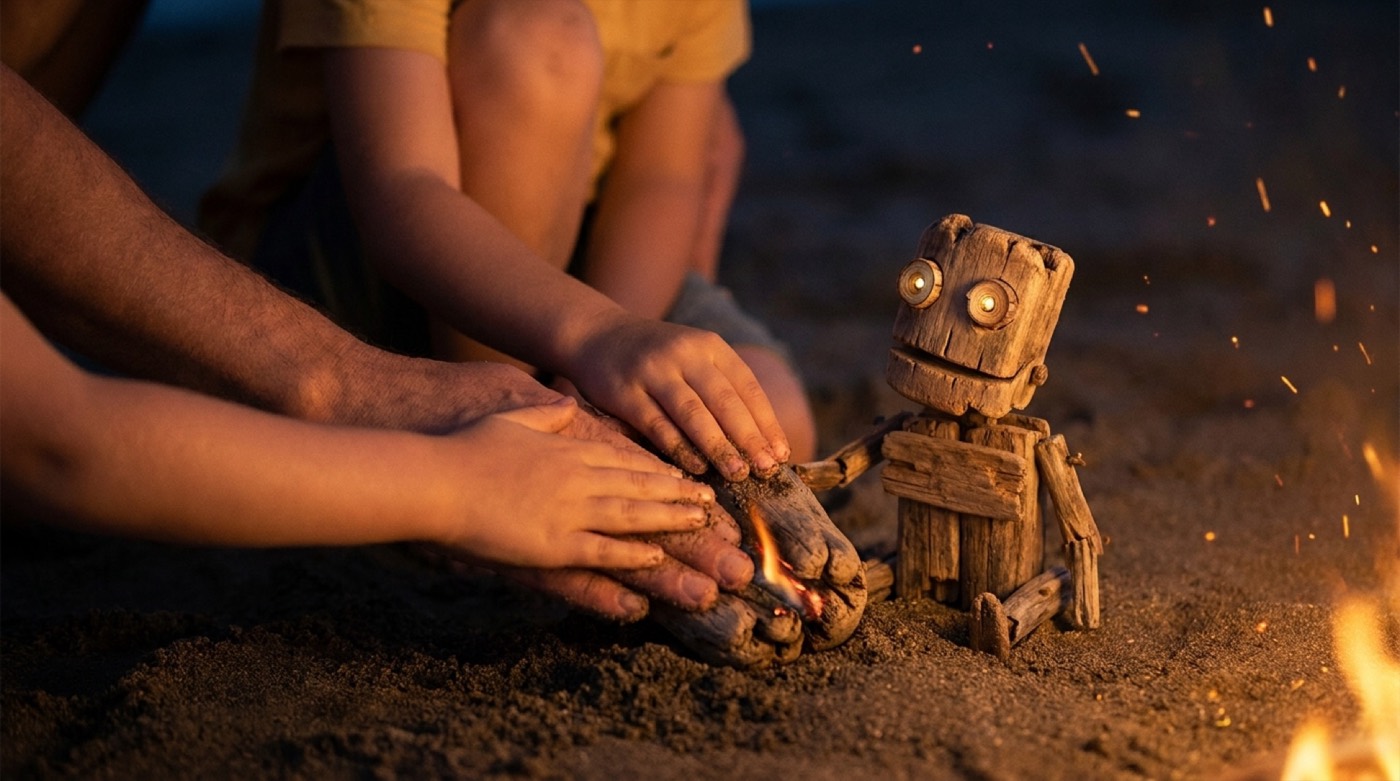
Three guttered flames, a burned wooden hand, and four humans moving as one thing for the first time since the dock. The Jumble notices.
A spring on the edge of Jumble country, and the island's first rule: needs before wants, said out loud, before anyone drinks.
The tide delivers a stranger's sea chest — tools, and a photograph of someone else's "us." What survives a wreck is what was held tightest.
Every worry the day was too busy for arrives at once. The watch-keeper's trick: write it on a leaf, set it in the pile, stand watch on what's real.
Season two · THE CAMP
structure — roles, boundaries, the family meeting
Skip vouches for the family — to a Collier who once vouched for a seagull — and the village opens one hut at a time, one earned trust at a time. Somewhere up the north path, storm-proofing the camp, the family finds a campsite decades old and a boy's knife driven into a dead fire ring. Nobody explains it yet. Season two ends in the Remembering House, looking at carved panels of a boy nobody has named.
The camp needs hands. The Collier — a furnace of a robot with hands like anvils — asks for one thing first: a family that deals its work out loud.
Echo-2 asks the real question: what does this family's shelter keep out, and who decides what gets let in? Build the door on purpose.
Bailer has counted everything, including a shelf labeled "MISC. DREAD (4)." The family writes its own rules under the Jumble's.
The Jumble redraws its sleeping spiral every night — closest to the fire is whoever had the hardest day. The family draws its own honest map.
The Jumble runs on five oils — fixing, counted time, words out loud, small gifts, or just staying nearby. Which oil does each of you run on?
Lashing a roof in the wind is just expensive praying. While storm-proofing on a calm day, the family finds a dead campsite — and a small knife, decades old.
Inside the Remembering House: carved panels of one boy, alone, building a wooden figure by lamplight, again and again, ten times over.
Season three · THE SIGNAL FIRES
connection — bids, rituals, appreciation
The camp works now, and into the ease walks Skip with a woven ball and a rule against hoarding the warm. The family learns the Jumble's rituals — game night, story circle, the Feast of Small Things — and helps build a signal fire beside one the Jumble has kept ready, unlit, for years. "We keep it for him," the Collier says, before he can stop himself.
The Volley Ball: catch it, say one true good thing about the thrower, throw it on. Holding it too long is called hoarding the warm.
Once a week, all work stops — village law. The Collier brings out a driftwood box older than any of the Jumble. Do not let Bailer bank the shells.
A sealed bottle rides ashore with two letters from another crew's crossing: "keep each other. It's the whole trick." The family's turn to tell its own.
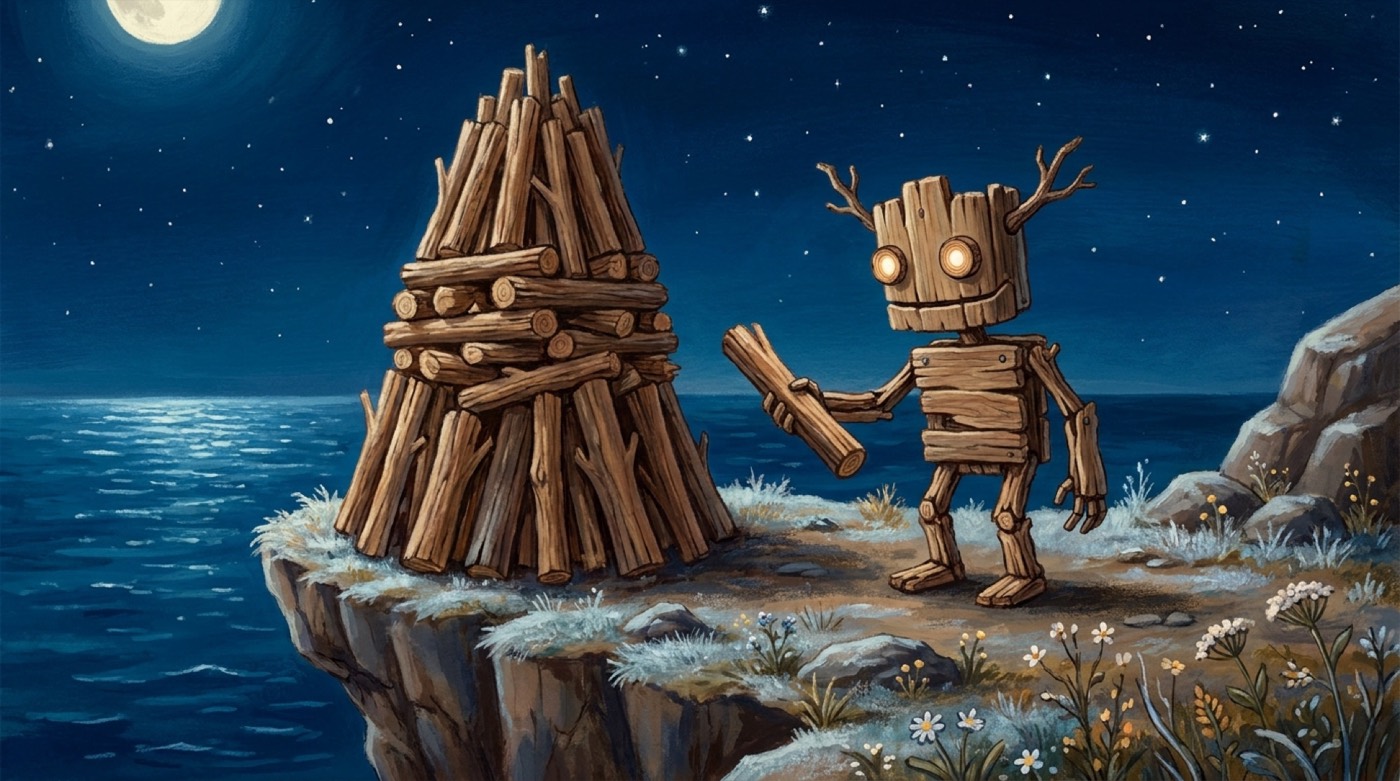
The Jumble has kept a cliff-top signal fire ready, unlit, for years. "We keep it for him," the Collier admits — the words out before he means them to be.
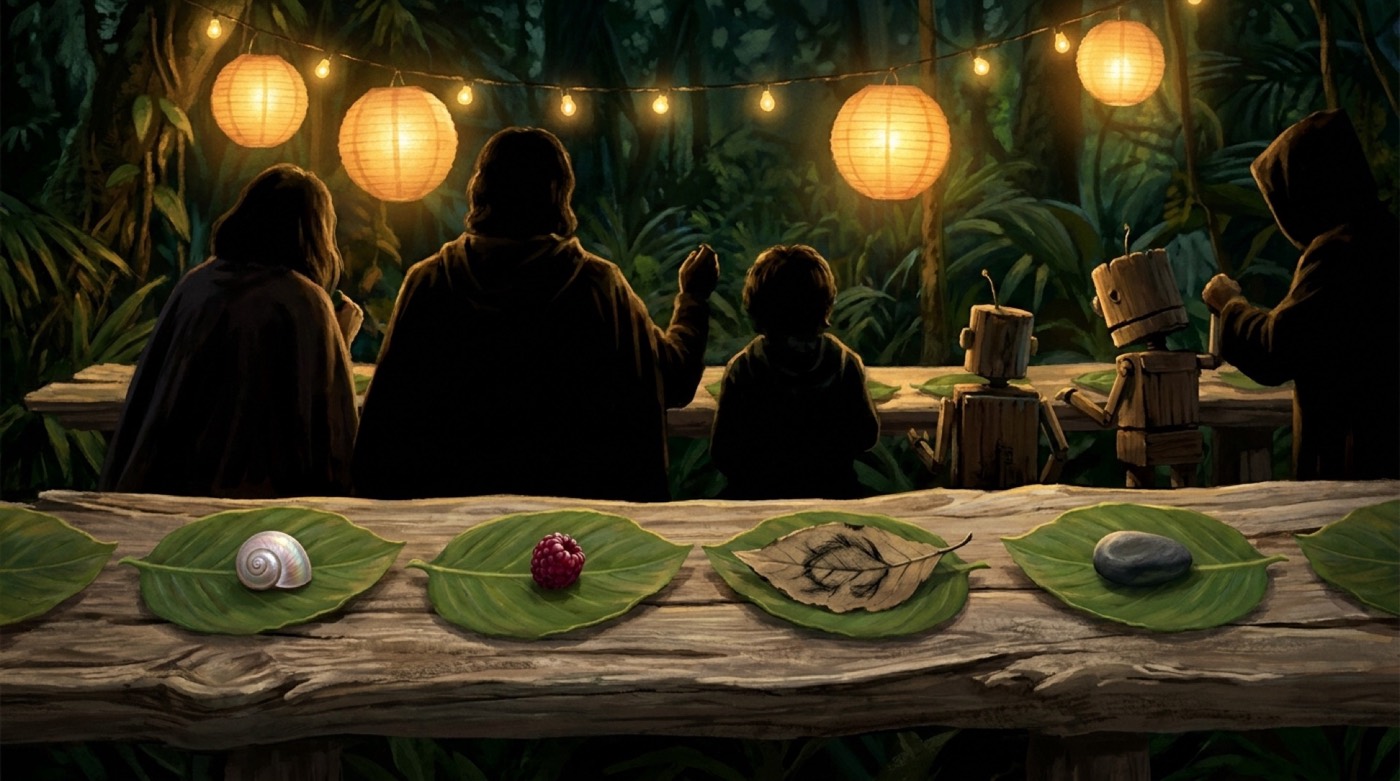
No big dishes, no grand gestures — the table is built entirely from tiny good things, each one presented out loud, with its own story.
Hollow leads them to the one place with no games at all. The rule, carved on a stone: BE. STILL. TOGETHER. The season's quietest triumph.
Season four · THE STORM RETURNS
the cycle — naming the Undertow, repair, the forge
A bigger storm wrecks the camp, and the family does the thing it swore it was done doing — the dock argument, word for word. Hollow finally names it: the Undertow, the current that pulls each of them separately so it can have them all. Naming it changes everything. Mid-season, the youngest goes missing toward the falls, and the search ends at a waterfall hiding a cave: the workshop where every robot in the Jumble was carved, by a boy named Elias, out of grief and storm-wood, one friend at a time.
"His name was Elias. A boy — younger than your youngest — put off a boat that never came back for him, twice, until he stopped waiting for one. He had no family to lose, so he built the ones he wanted, out of storm-wood, one at a time." — Hollow, at the cave mouth
The dock argument comes back, word for word, in the wreck of the storm — until Hollow names the current pulling them apart. It isn't either of them.
When the hard talk starts, who chases and who hides? Neither is wrong. The plank between them: sixty seconds, and always come back.
The actual conch comes down from the rules post. Its one law isn't "be nice" — it's finish. Half the storm-words, said all the way through, turn out to be apologies wearing armor.
A rope of dozens of splices, never replaced, only ever repaired. The family brings its own frayed places and mends them — stronger at the weld.
Four hammers make an apology that holds — what I did, what it cost you, what I'll do different, the ask to repair. The word "but" melts on this anvil.
The youngest goes missing toward the falls in a flash flood. The search line holds — together, the island's only law — and finds a glow behind the water.
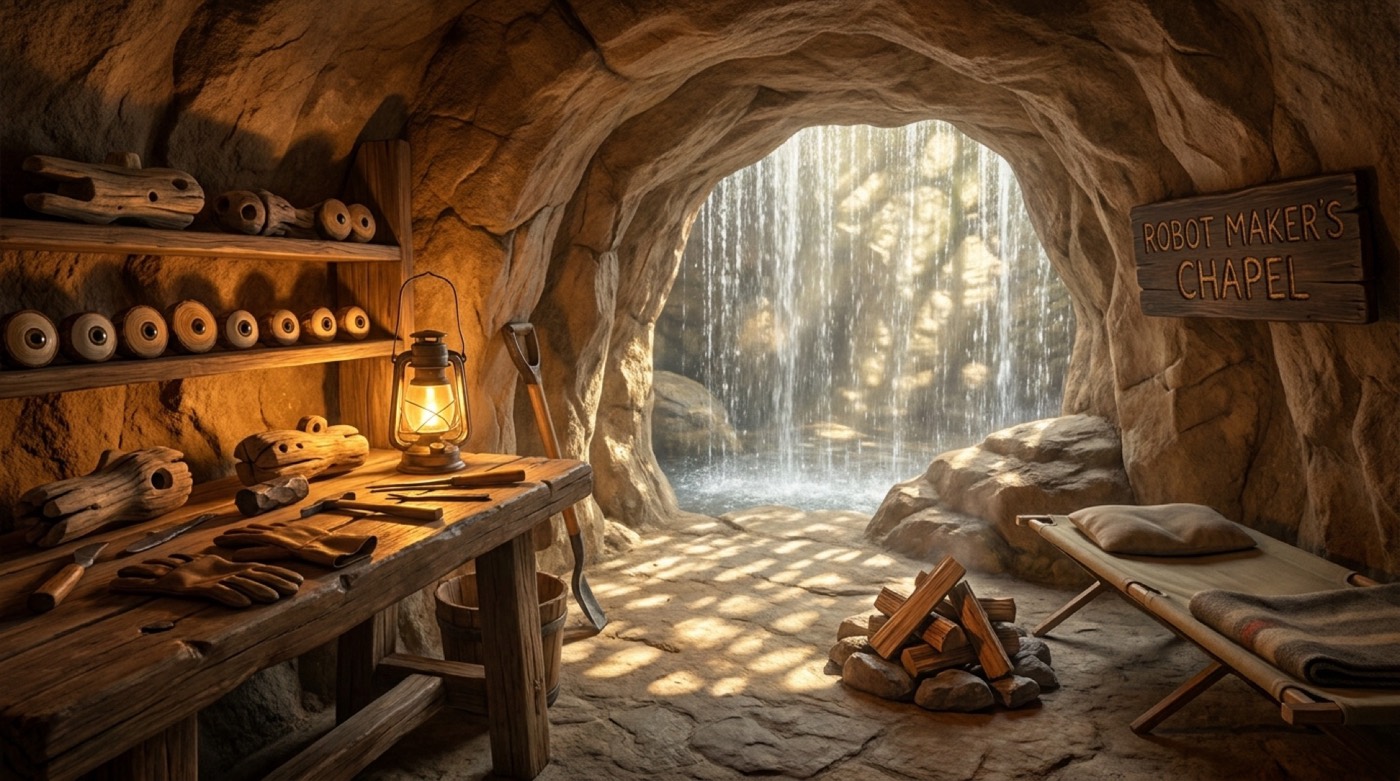
Behind the falls: Elias's workshop, ninety-seven tools each named for the friend it was for, and the truest, loneliest story on the island.
Season five · THE RAFT
integration — the launch, and what the boat is named
Five trials, the same five every Jumble passes — and one of them is a family, being taken home. They build a raft from Elias's own drawings, load-test it under real weight, seal letters to the tide, and stand at the totem while the Collier cuts their names into the long record of the island: ELIAS'S PEOPLE — ALL OF US. Dawn on the last day, the signal fire finally catches, and the sea answers.
Trial one, from Elias's own drawings: every plank gets the name of something this family survived before it gets a lashing. You don't float on wood.
Trial two: the whole family on the raft at once, weight shifting, calling the shift out loud. A raft that holds one is driftwood. One that holds all is a vessel.
Trial three, at the acceptance feast: a letter to someone who isn't here, or someone you were. The sea delivers. It always has.
Trial four, at the village totem: the Collier cuts the family's names into the record of the island. "Who vouches?" "I DO," says Skip — again.
Dawn. The signal fire catches. A real boat answers on the horizon — and the family names the raft before naming what they lost to build it.
"A good name. A worked-for name. Every boat I ever mended was named for what its crew hoped. Yours is named for what you PROVED. Sail it that way." — the Collier, at the launch
The village that raised itself
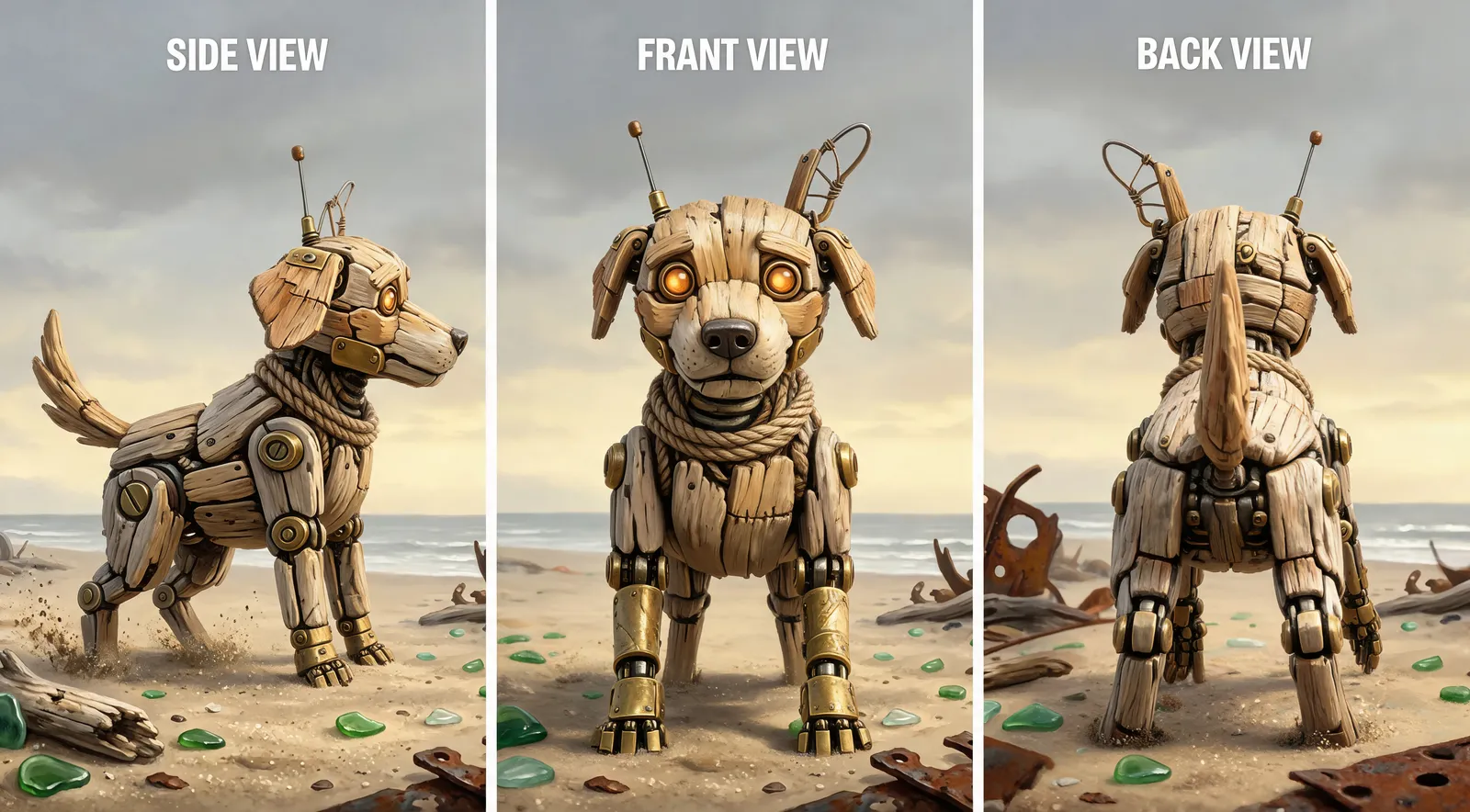
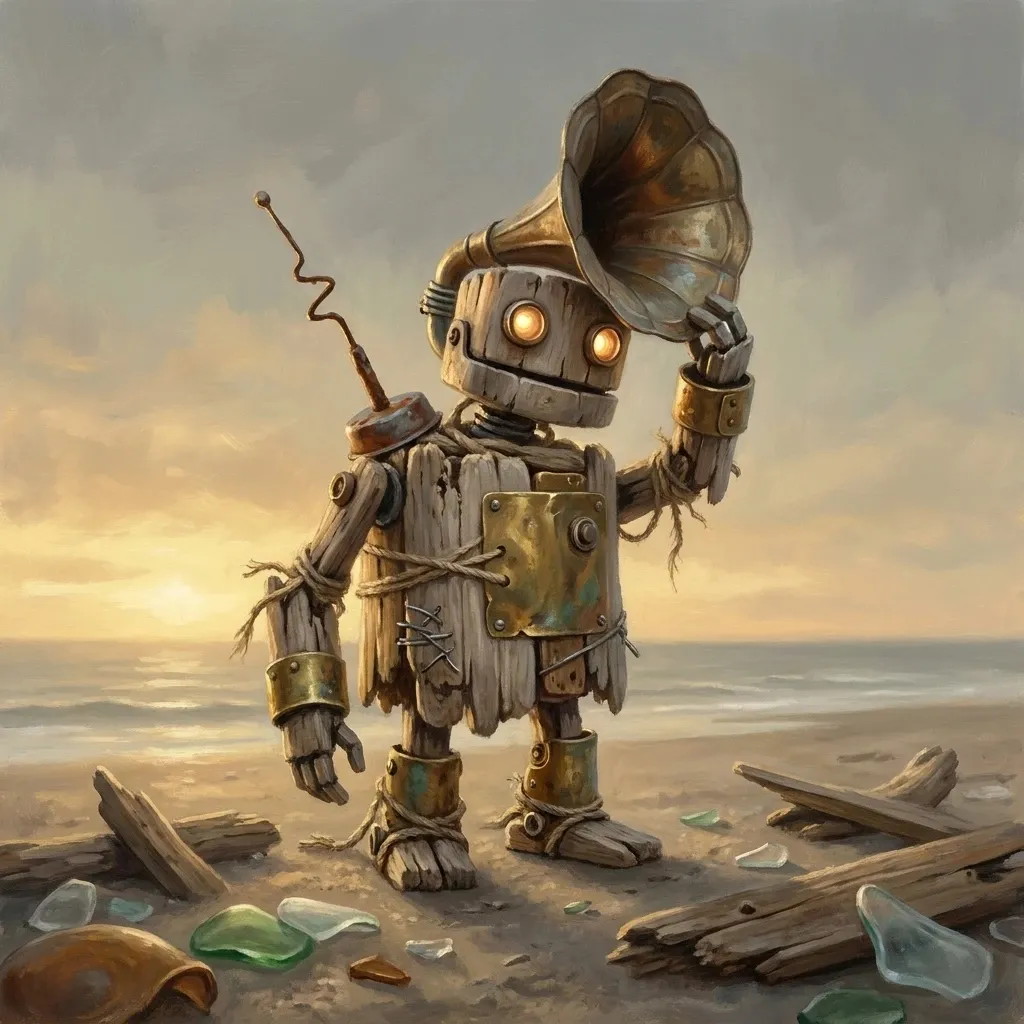
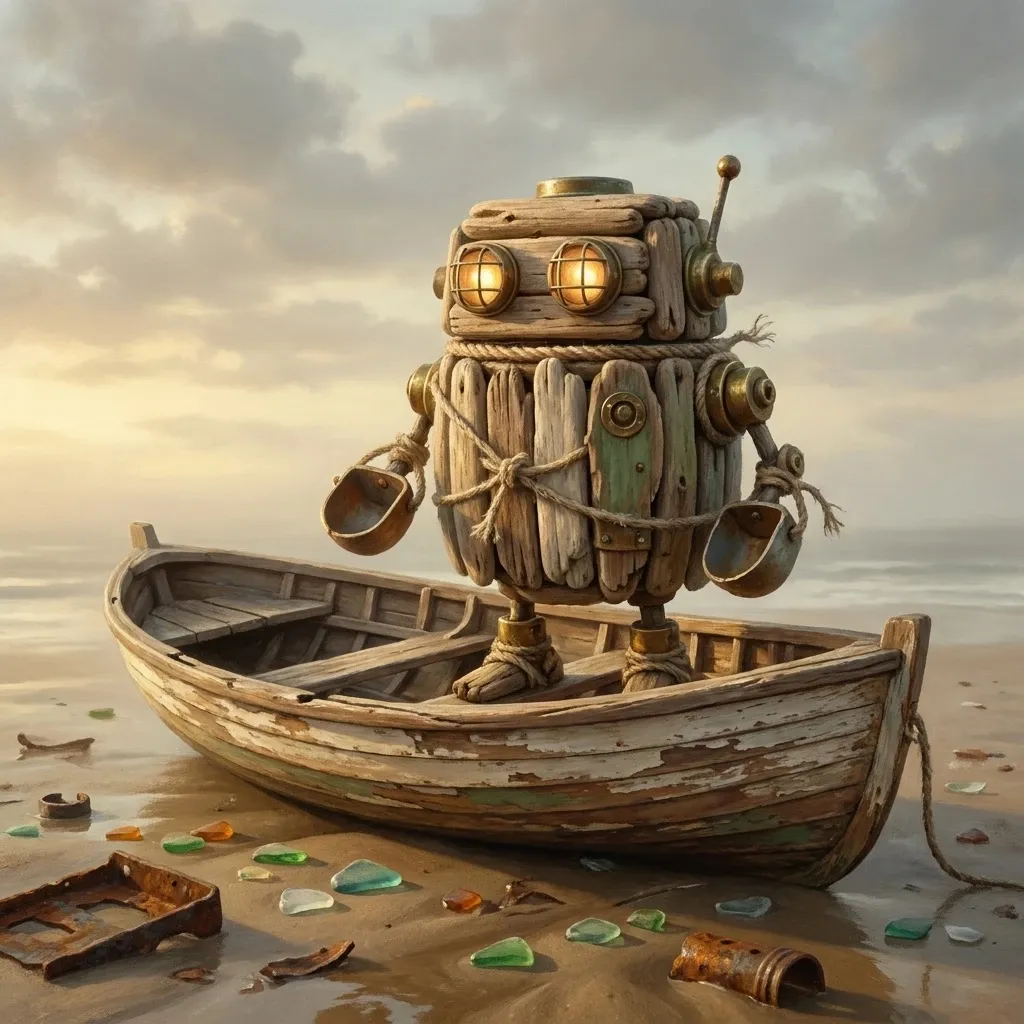
Every robot at camp is one of Elias's ninety-seven — carved from storm-wood, taught one specific thing he most wished someone had taught him, and left running long after he had anyone left to carve for. They never pretend to be family. That's the rule. Family is earned, thirty-one challenges at a time, the same ones every one of them passed.


"…a wall with a door in it. That is the good kind. I live in a shell with no door and I am TELLING you, build the door." — Hollow
The story, in pictures
Each milestone opens on an image that drifts slowly across the screen while the words land. Faces stay out of frame, always: the family in the picture is meant to be yours.
In development — a preview, not a finished product. Not a medical device and not a substitute for care.
Where it stands
That's the island's last law: the fire remembers the family that built it. If you want the whole game — twenty campfire games, the buildable 3D world, the honest robots who keep camp but never pretend to be family — it's back at Driftwood's front door.
— Lance & C.