The Session Studio

Seventeen rooms you can be in together.

A sand tray you both move, from two cities. Clay two people shape at once. A body map a child fills in while you watch. Not screen-sharing — the same room.

Every picture below is a photograph of the working software.

Most therapy software gives you a video window.

Then it leaves you to do the actual work with your hands tied — describing a tray you cannot both see, asking a nine-year-old to hold a drawing up to a webcam, talking about breathing instead of breathing together.

The Session Studio is the other half of the hour. Seventeen rooms, inside the same telehealth call, that a therapist and a client are in at the same time. What one person moves, the other person watches move.

It ships inside The Lighthouse and runs on the clinician's own machine. Nothing here is a separate subscription and nothing here phones a company in the middle.

The rooms.

Photographed on 15 August 2026, from the running build, at a laptop size. The invented practice you see is the demo one — no real client appears anywhere on this page.
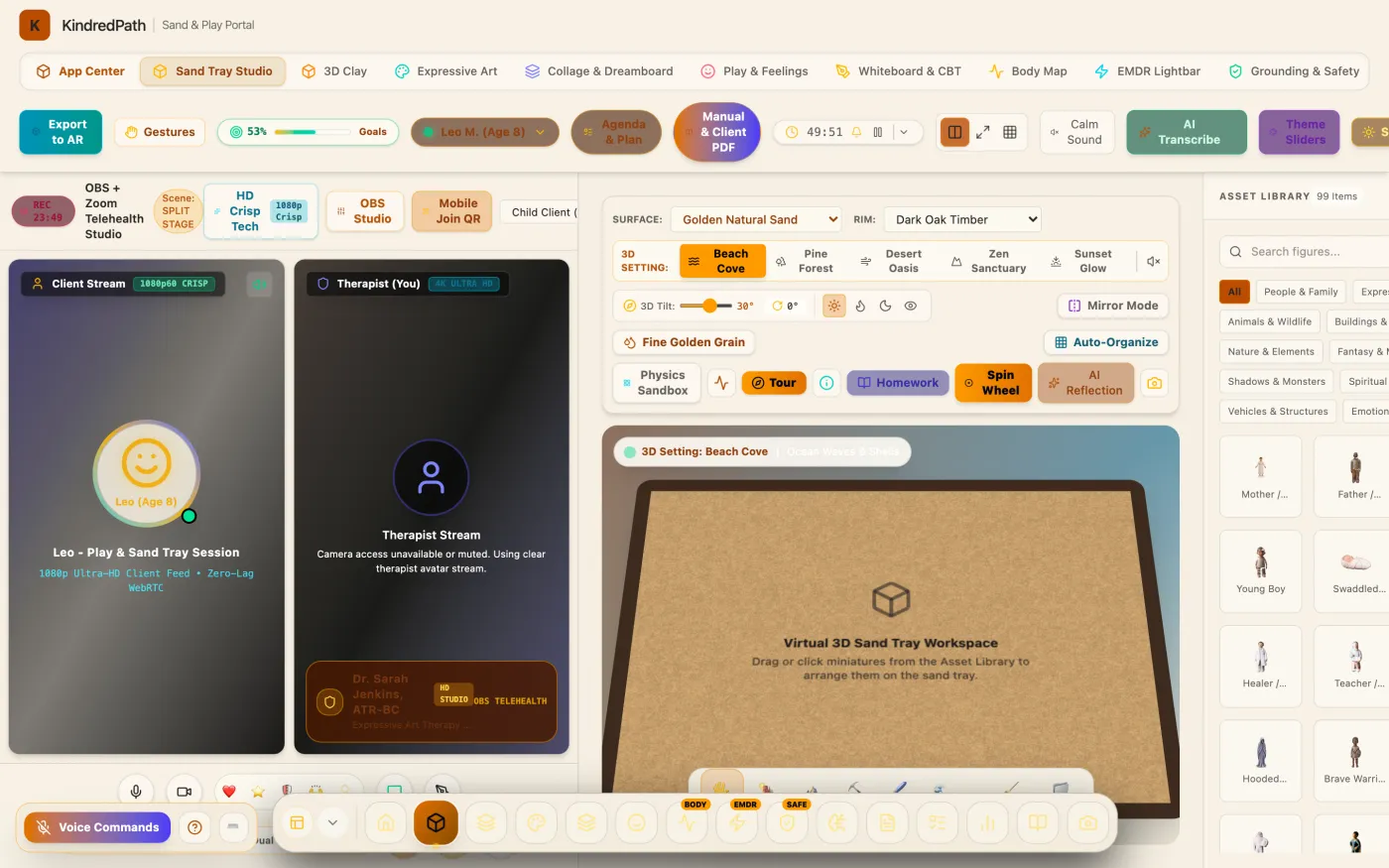
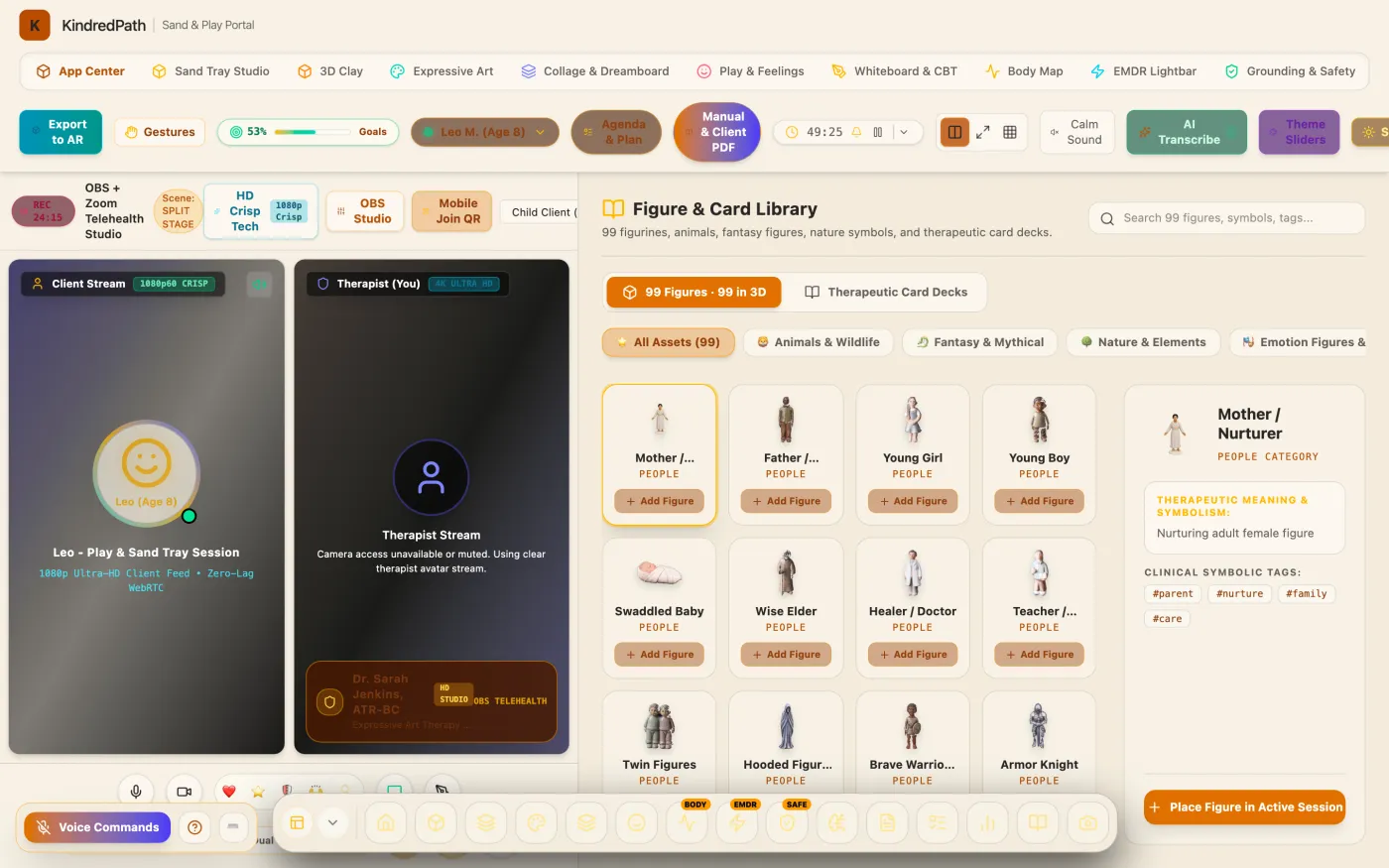
The Sand Tray Studio: a sand tray with placeable figures, shelves of miniatures down the side, and a live client video panel.
Sand Tray The tray, the shelves, the figures — and both of you can move them. Sandtray work that survived the jump to telehealth.
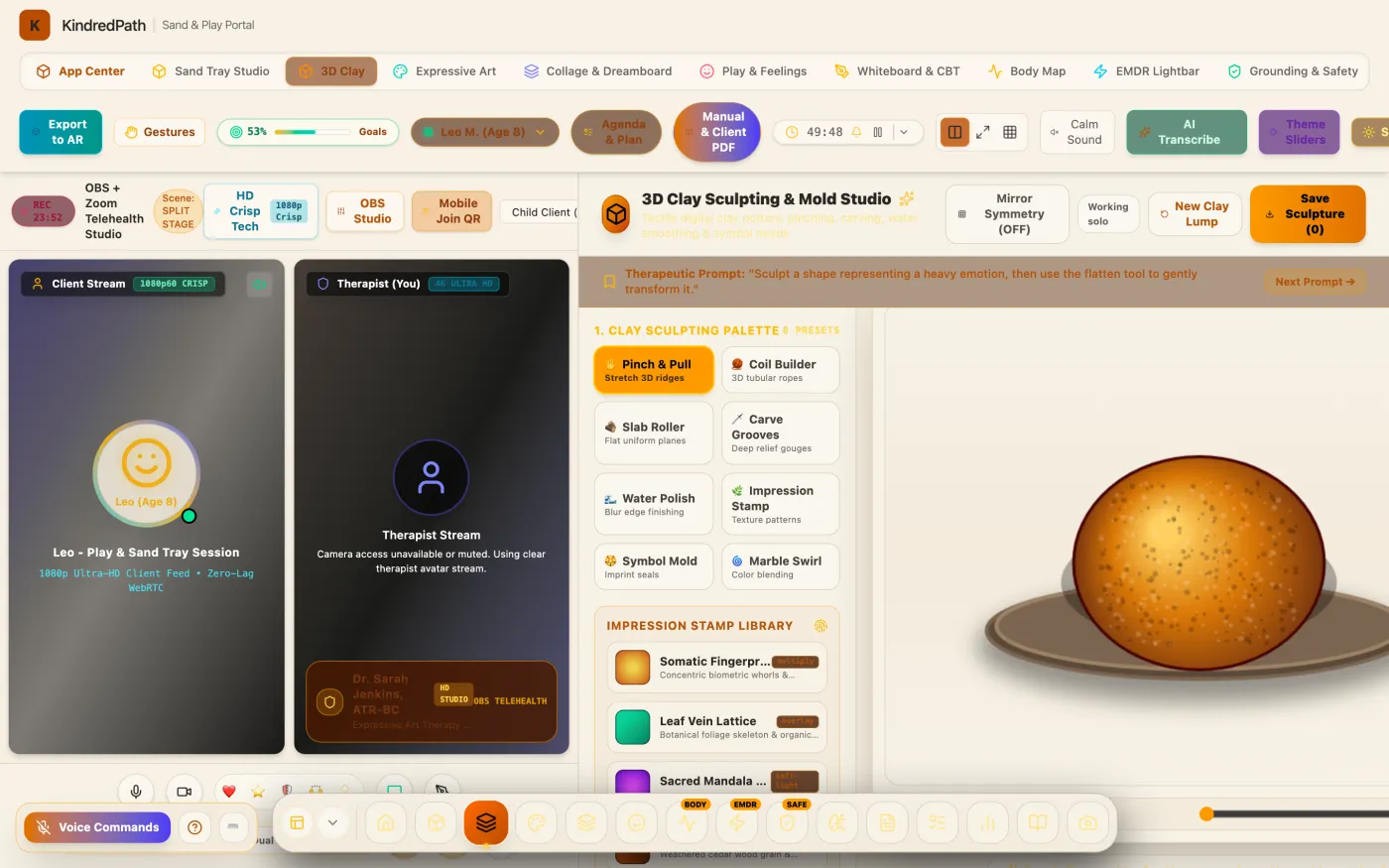
The 3D Clay studio: a sculptable clay form on a turntable with shaping tools.
3D Clay Something to push your thumbs into when words are not arriving. Shaped on a turntable, kept in the session record.
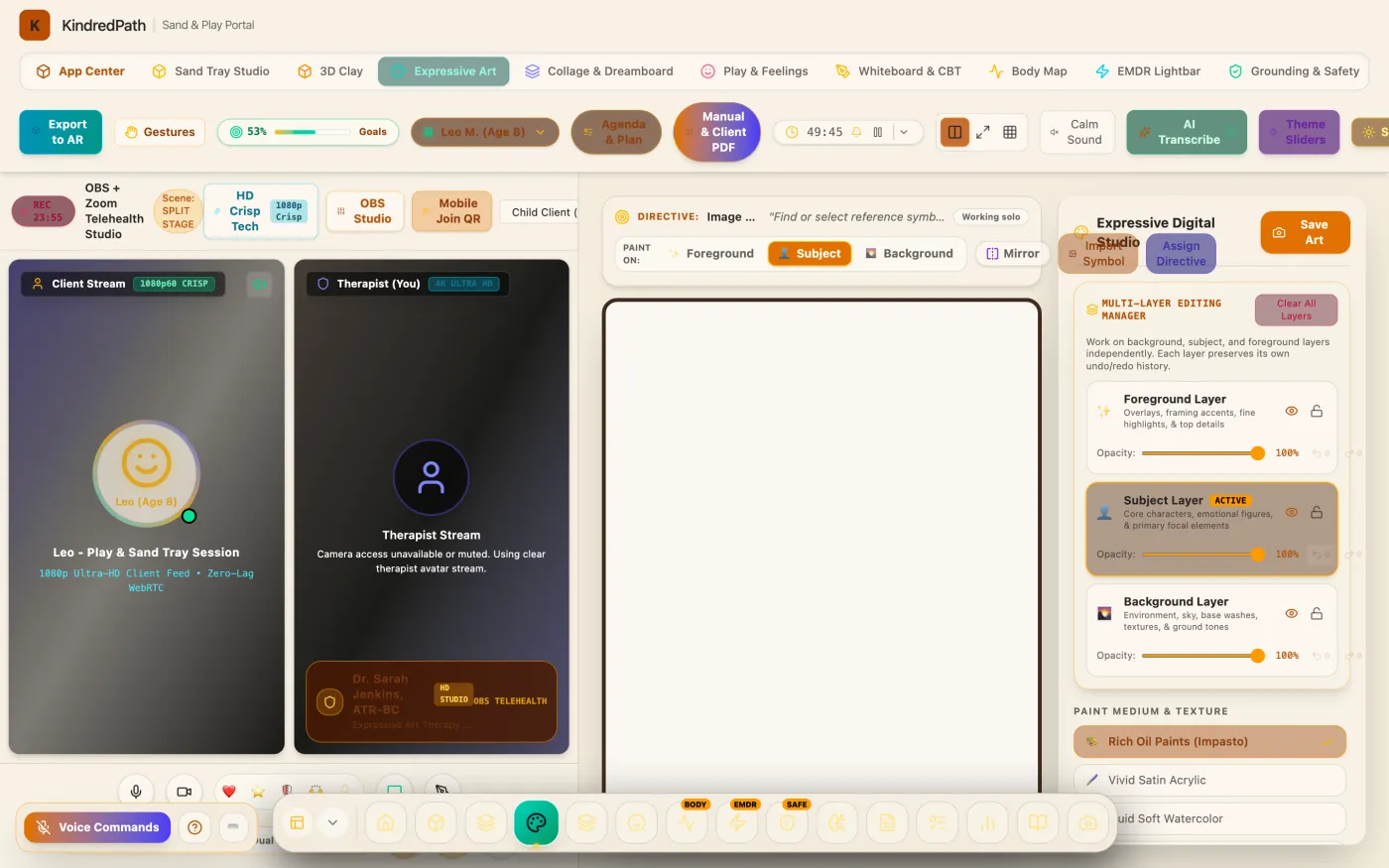
The Expressive Art studio: a drawing canvas with brushes, colours and layers.
Expressive Art A canvas, brushes and colour. The oldest tool in the room, finally usable by two people who are not in the same building.
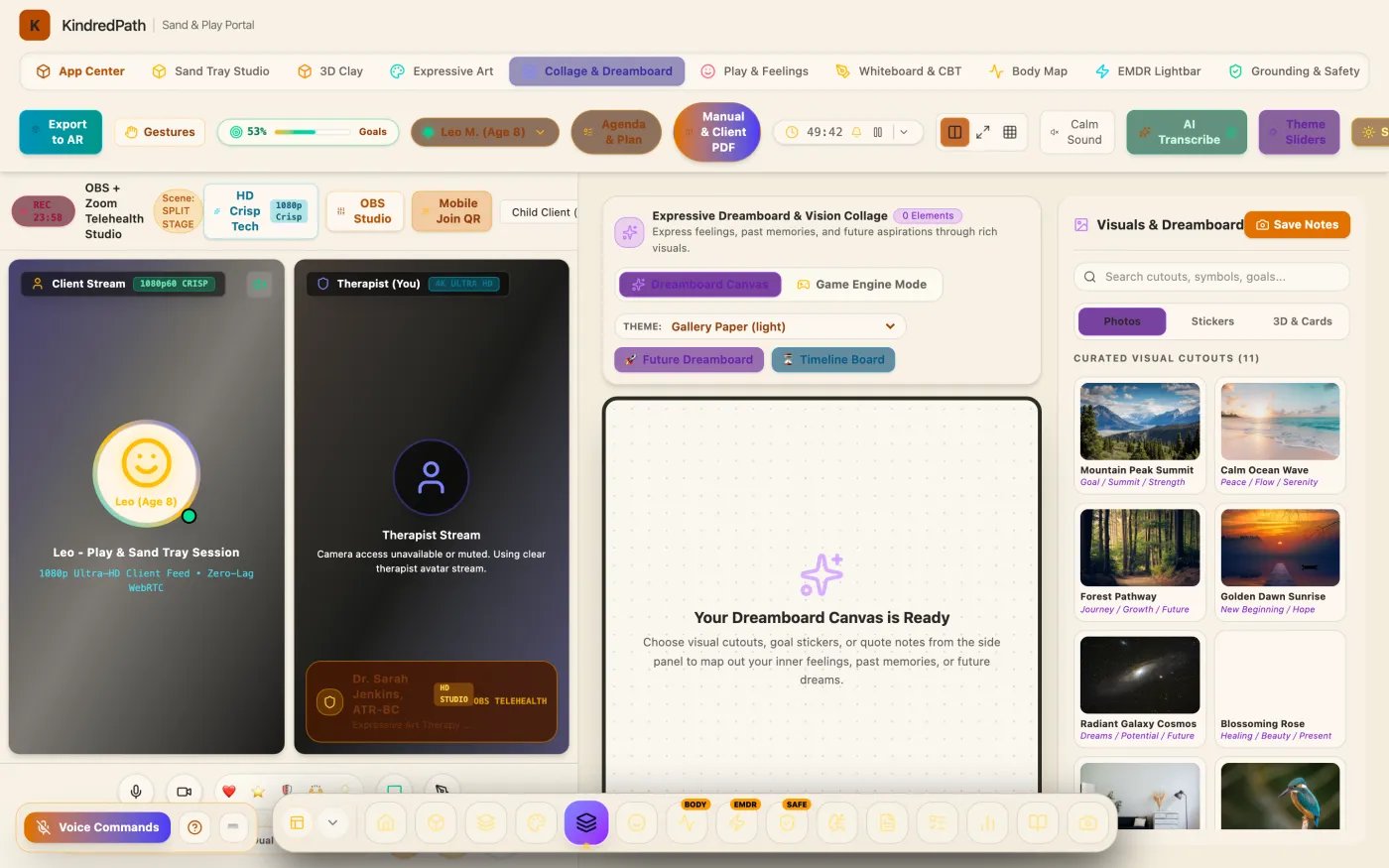
The Collage and Dreamboard studio: a board being assembled from image tiles.
Collage & Dreamboard For the client who would rather choose an image than find a sentence.
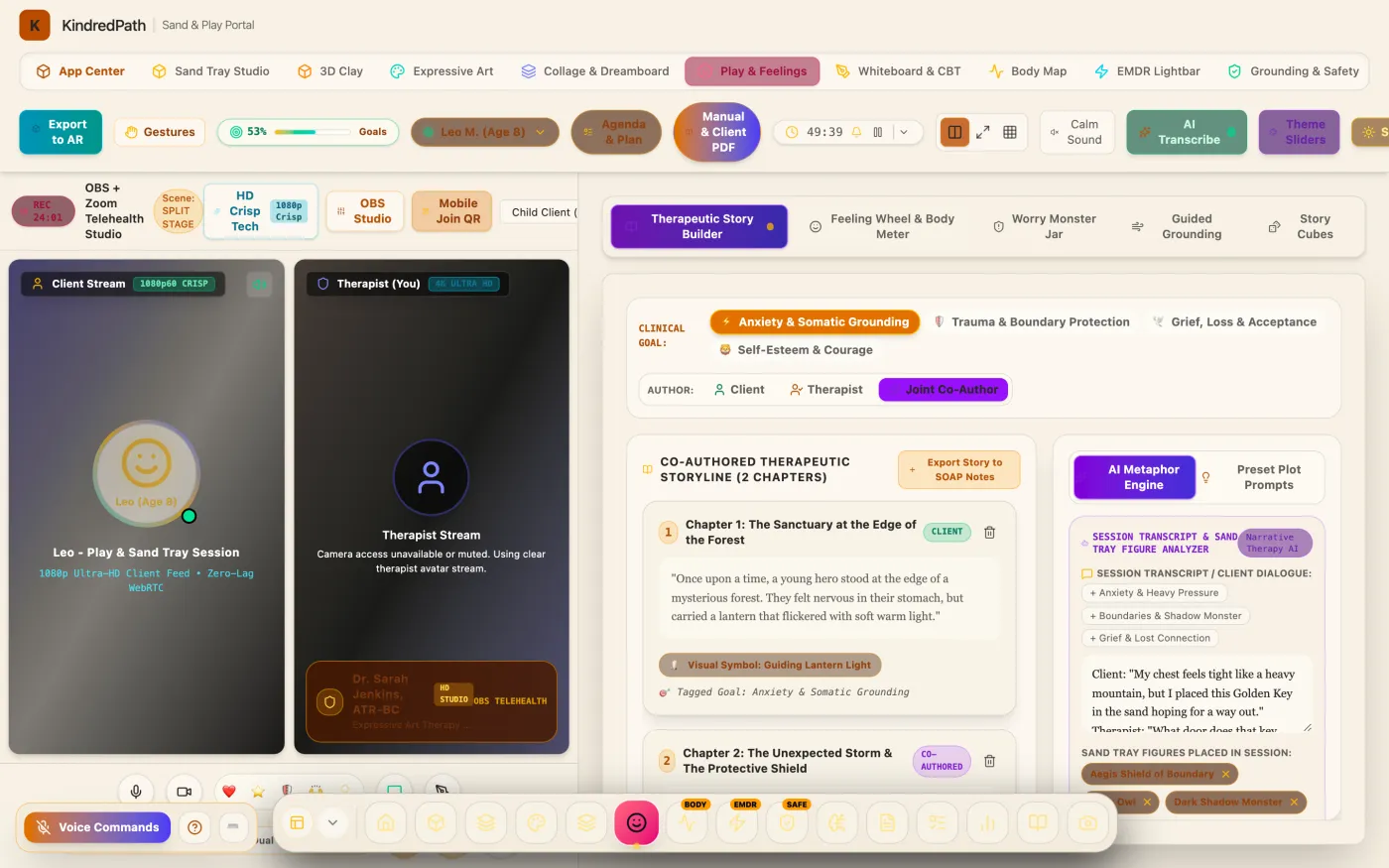
The Play and Feelings studio: play-therapy scenes and feelings characters for younger clients.
Play & Feelings Built for the youngest clients, who will show you a scene long before they will answer a question about it.
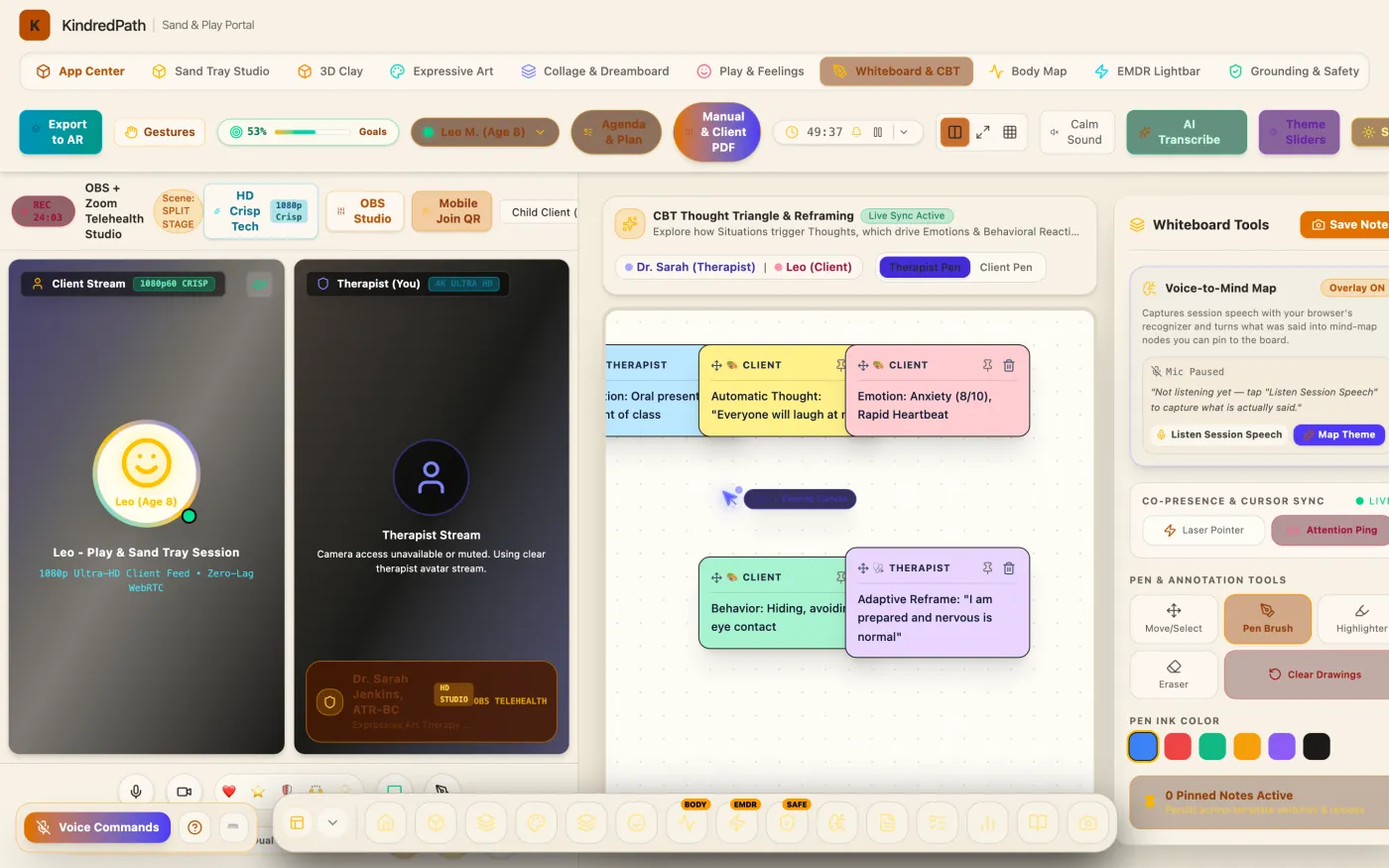
The Whiteboard and CBT studio: a shared whiteboard with CBT worksheet frames.
Whiteboard & CBT Thought records and formulations drawn out together, rather than emailed as a PDF nobody opens.
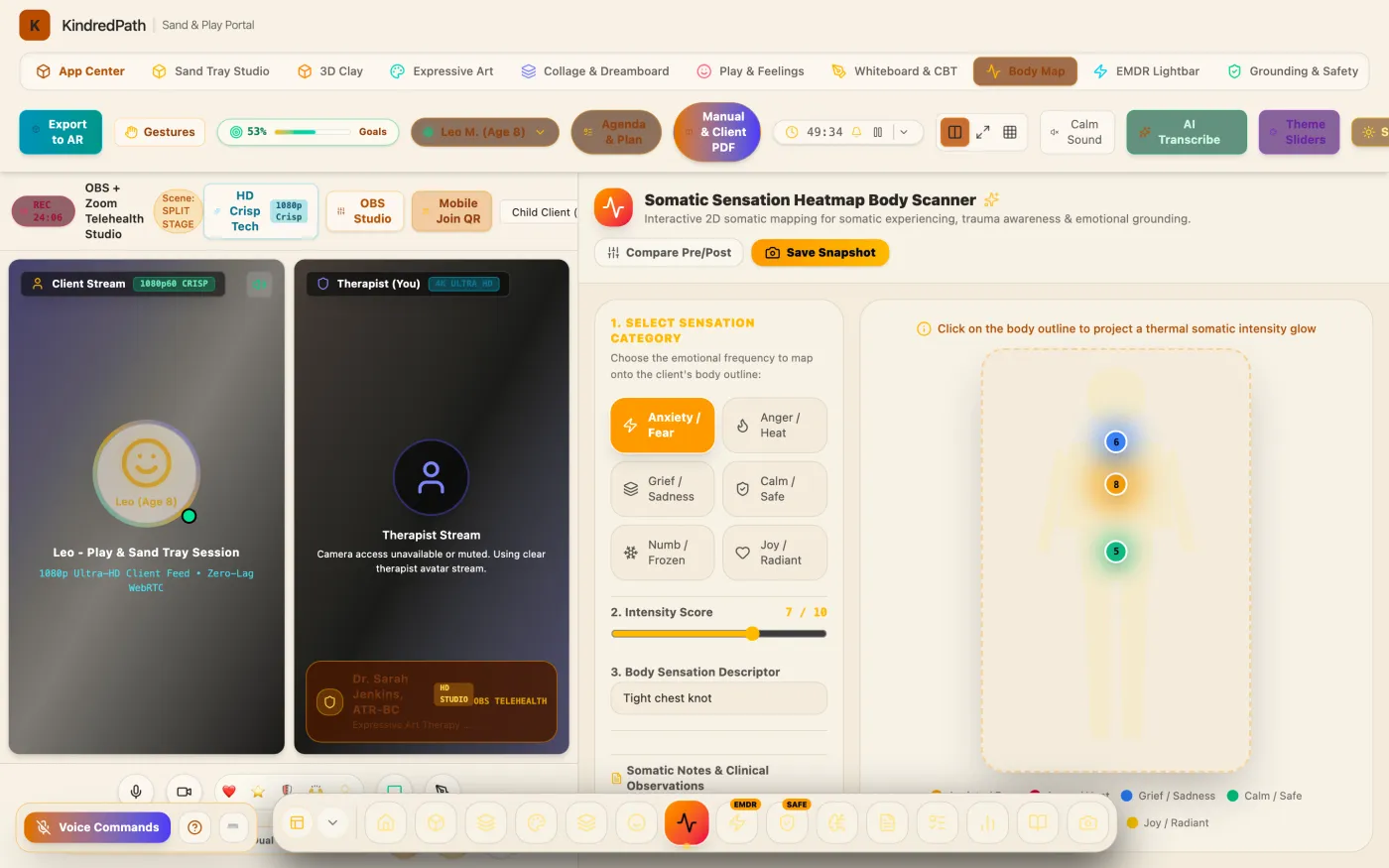
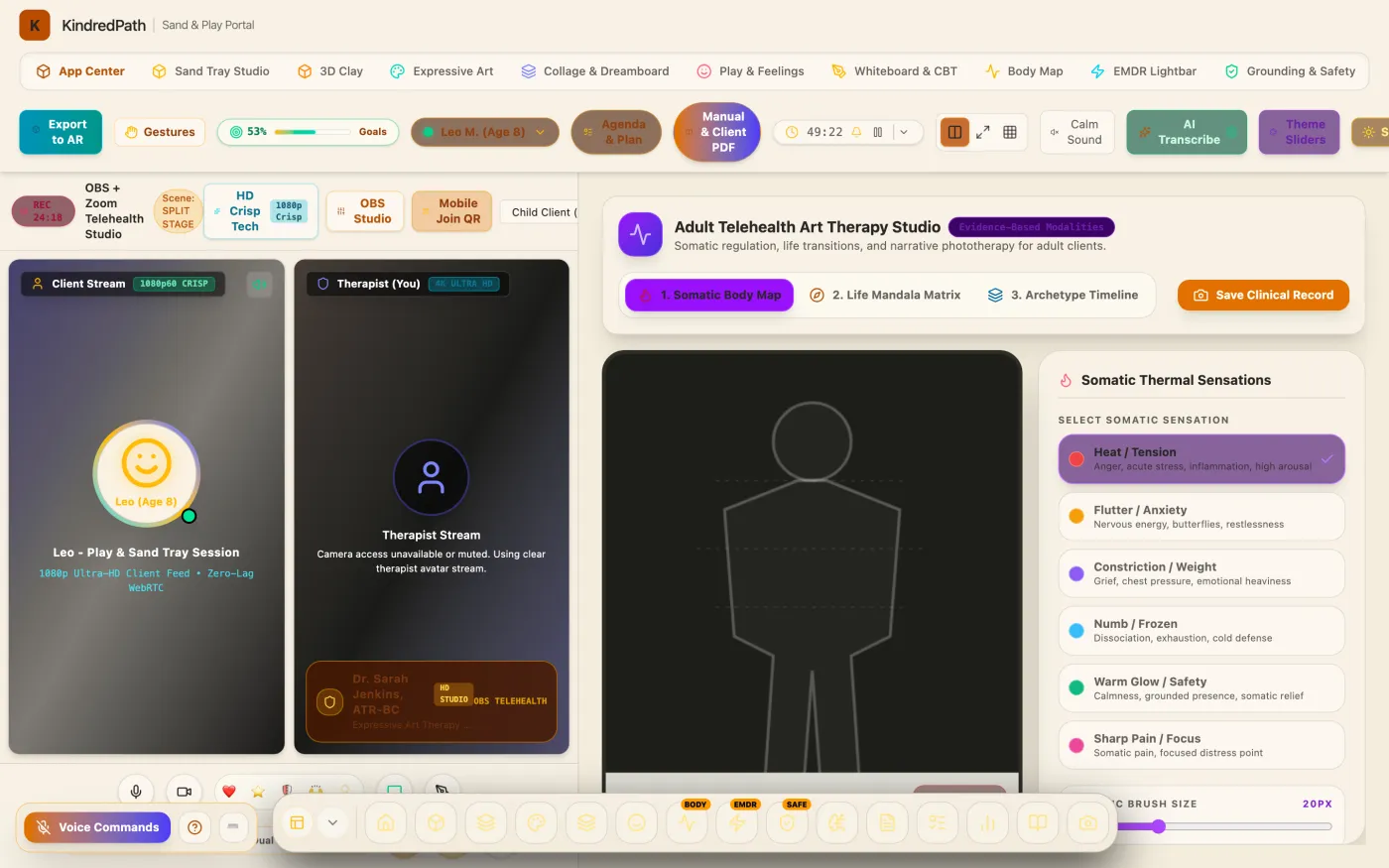
The Body Map studio: a body outline the client marks with where sensations sit.
Body Map Where it sits, marked by the client on a body outline. Their placement, in their own hand — the software measures nothing and no sensor is attached.
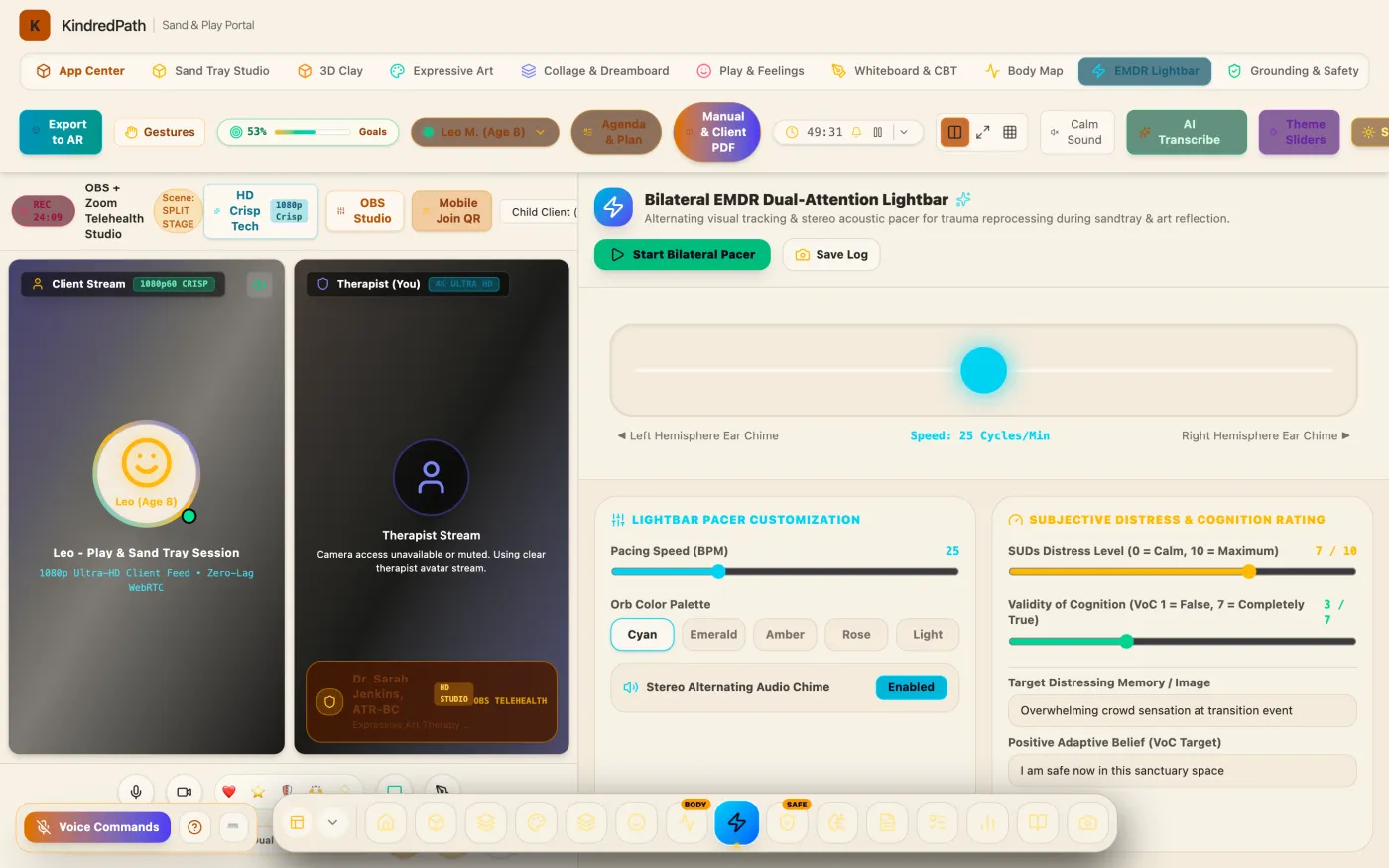
The EMDR Lightbar studio: a bilateral stimulation lightbar with speed and pattern controls.
EMDR Lightbar Bilateral stimulation with the controls in your hands, not the client's, and the tempo you actually use.
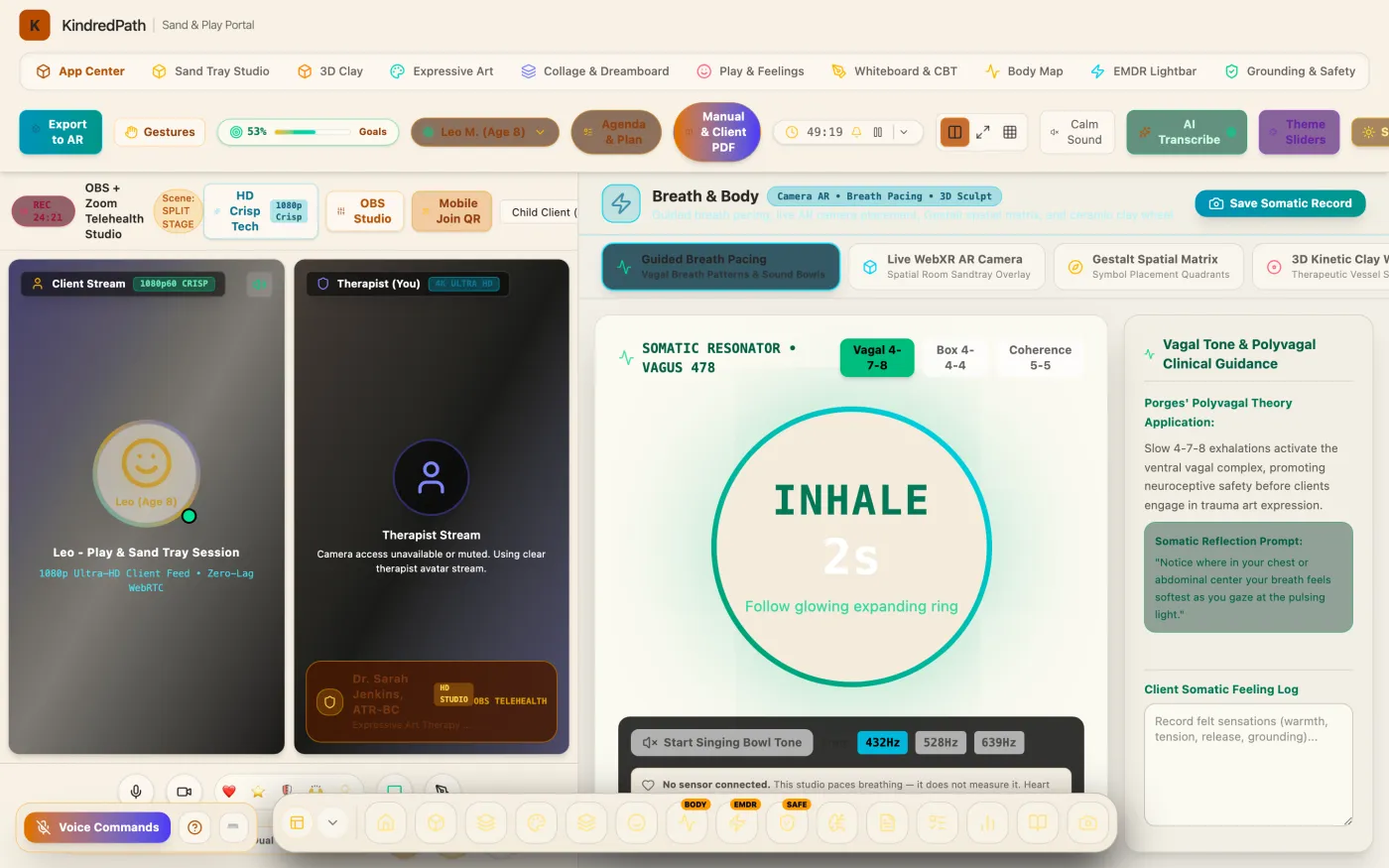
The Breath and Body studio: a breathing pacer with visual guidance.
Breath & Body A pacer you breathe with, together, at a tempo you set. It paces — it does not read anything off the client's body.
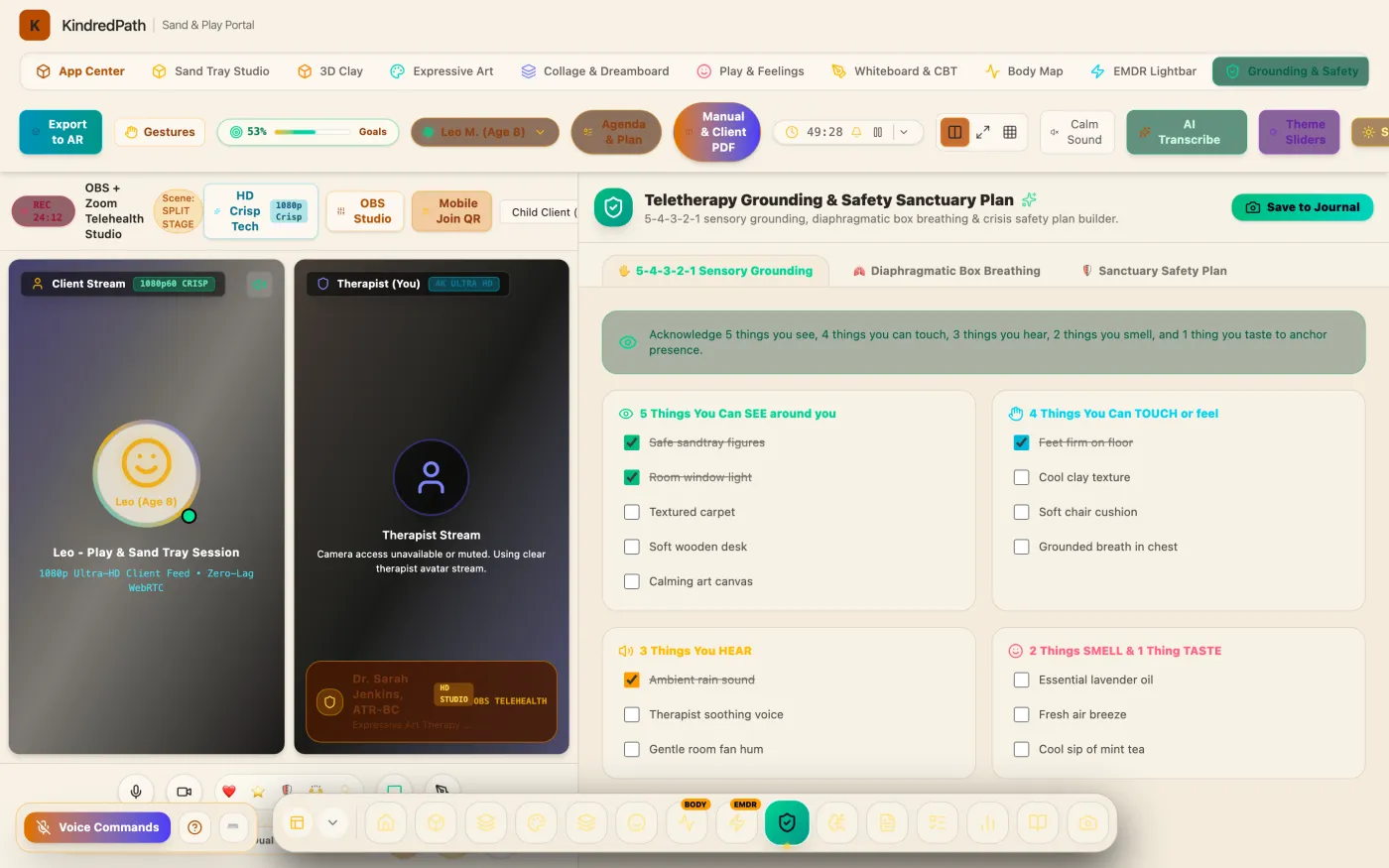
The Grounding and Safety studio: 5-4-3-2-1 sensory grounding, box breathing, and an empty safety plan builder.
Grounding & Safety 5-4-3-2-1, box breathing, and a safety plan built with the client. Every field starts empty — the plan is theirs, in their words, with their people, for wherever they actually are.
The Adult Telehealth studio: an adult-facing art therapy workspace with session tooling.
Adult Telehealth The same craft, set for adults — for the client who says they are "not creative" and then fills a canvas.
The Resource Library: handouts and materials ready to bring into the session.
Resource Library Your handouts and materials, in the room, without leaving the call to find a folder.
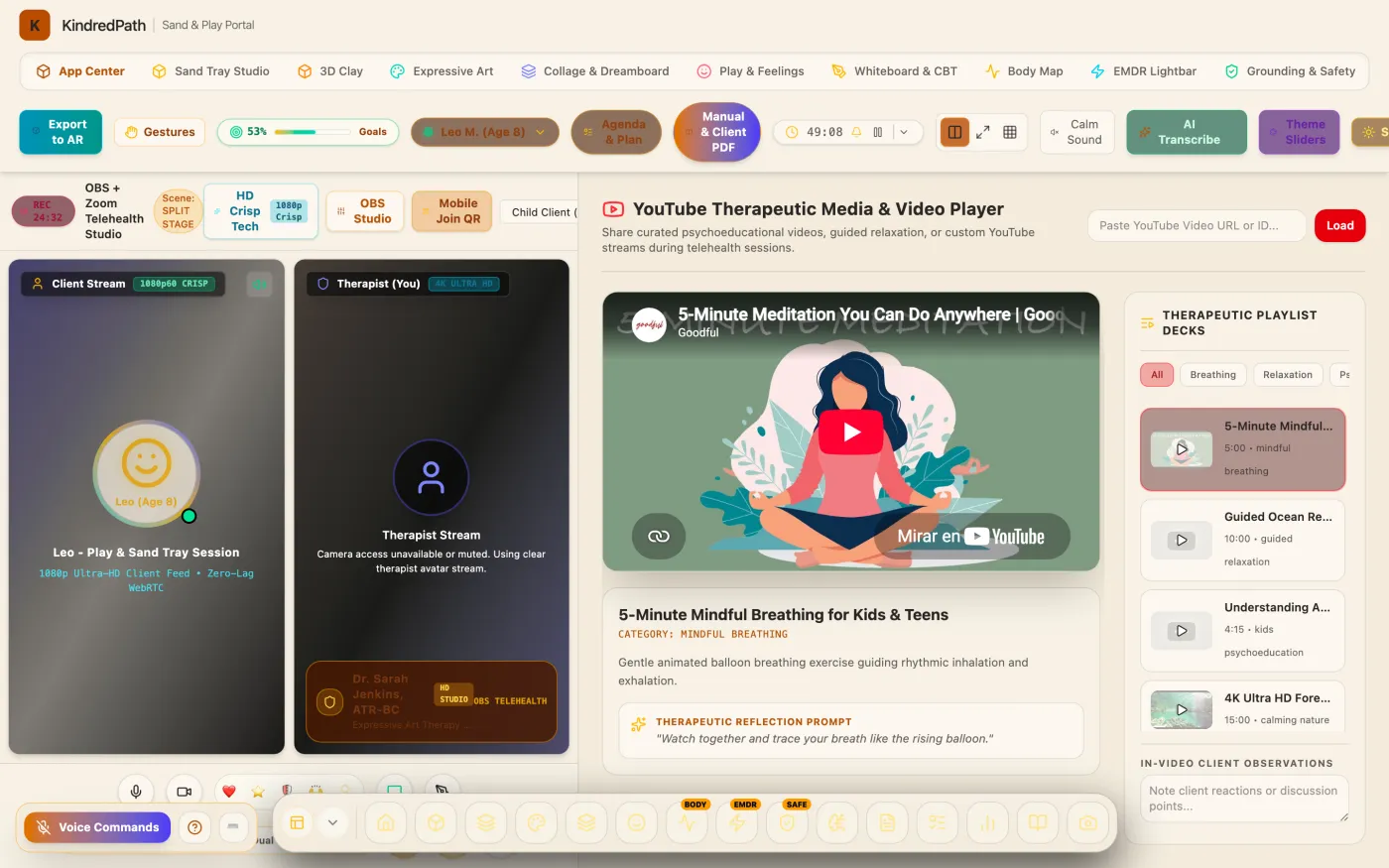
The shared video room: a video player both people watch in sync.
Watch Together A video you both watch in step, paused at the same second, so you can talk about the bit that mattered.
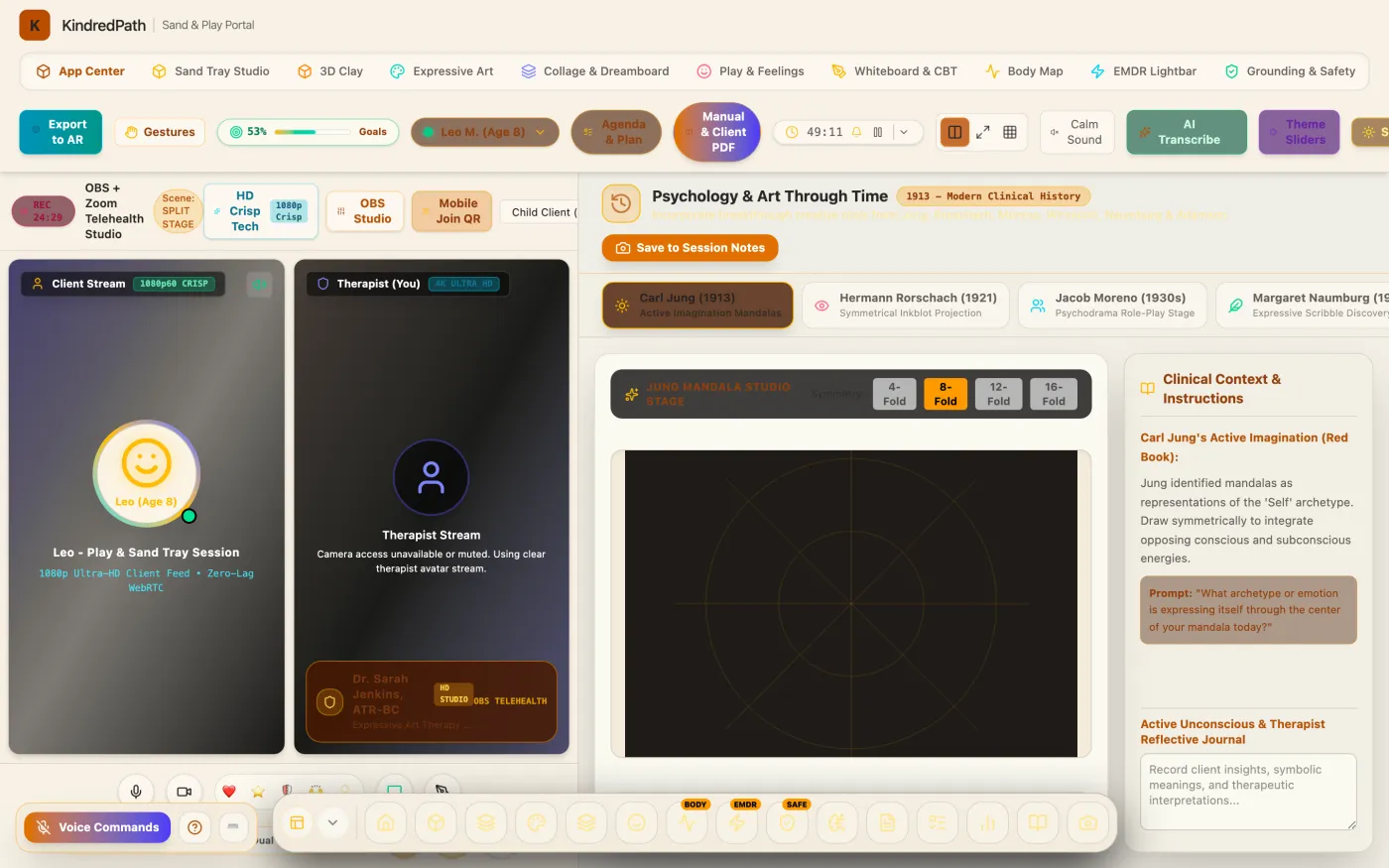
The Psychology History room: an illustrated tour through the history of the field.
Psychology History Where these ideas came from, for the client who wants to know why you are asking them to do this.
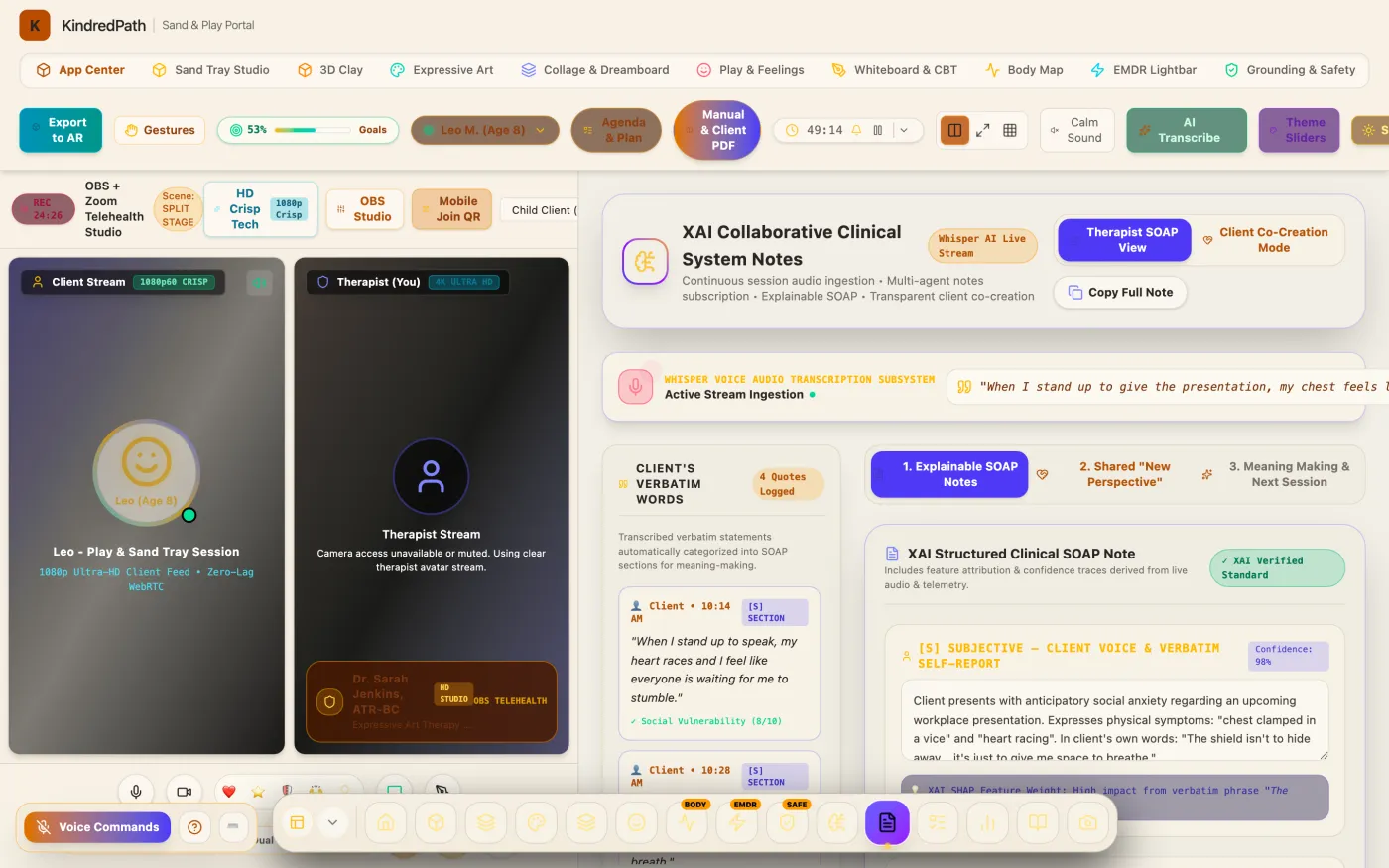
The collaborative notes room: a session note drafted alongside the client.
Collaborative Notes The note, written where the client can see it. Nothing about them recorded somewhere they are not allowed to look.
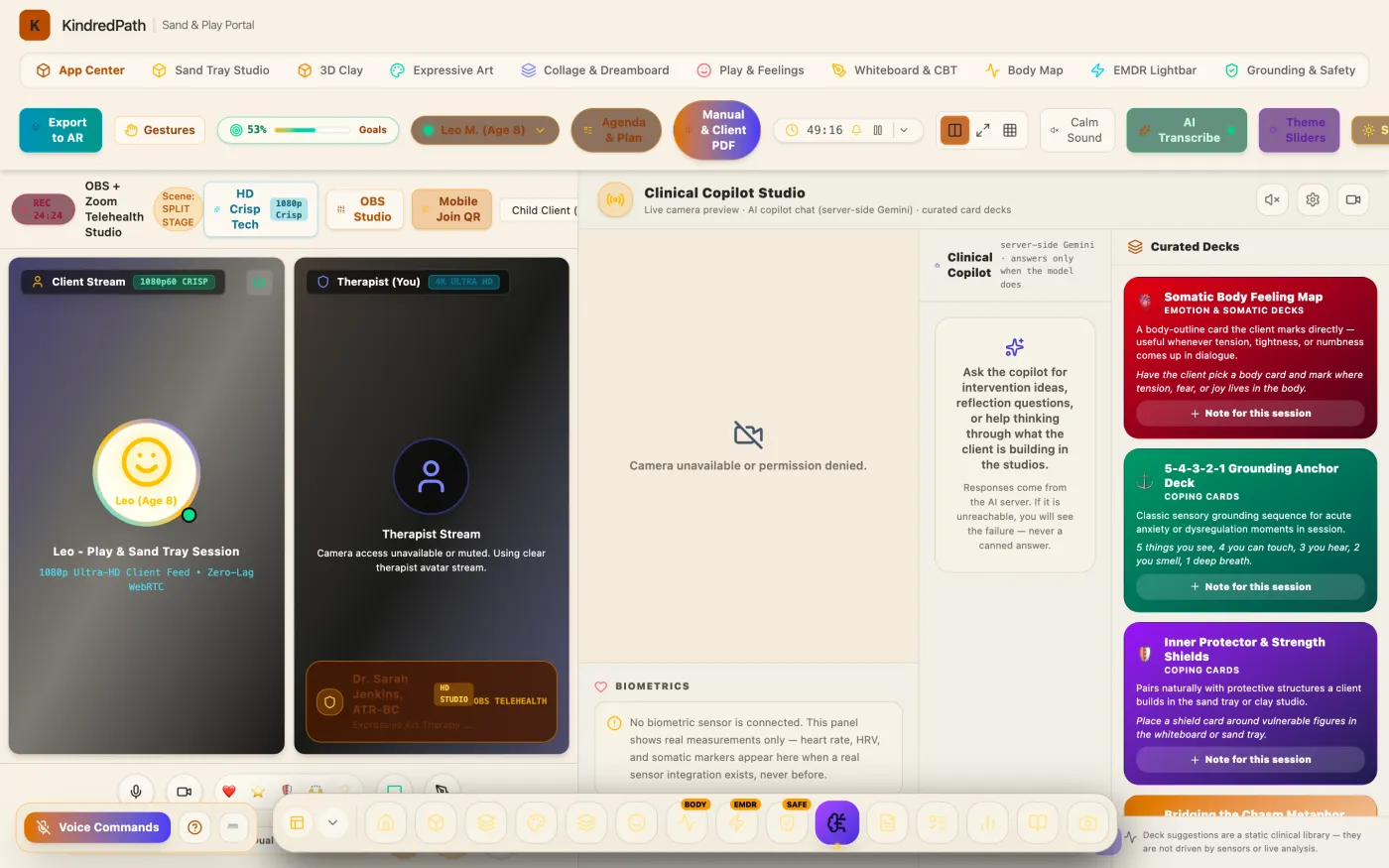
The explainability room: the assistant showing which inputs led to each suggestion.
Show Your Work When the assistant suggests something, this is where it shows what it read to get there. You can disagree with a reason. You cannot disagree with a verdict.
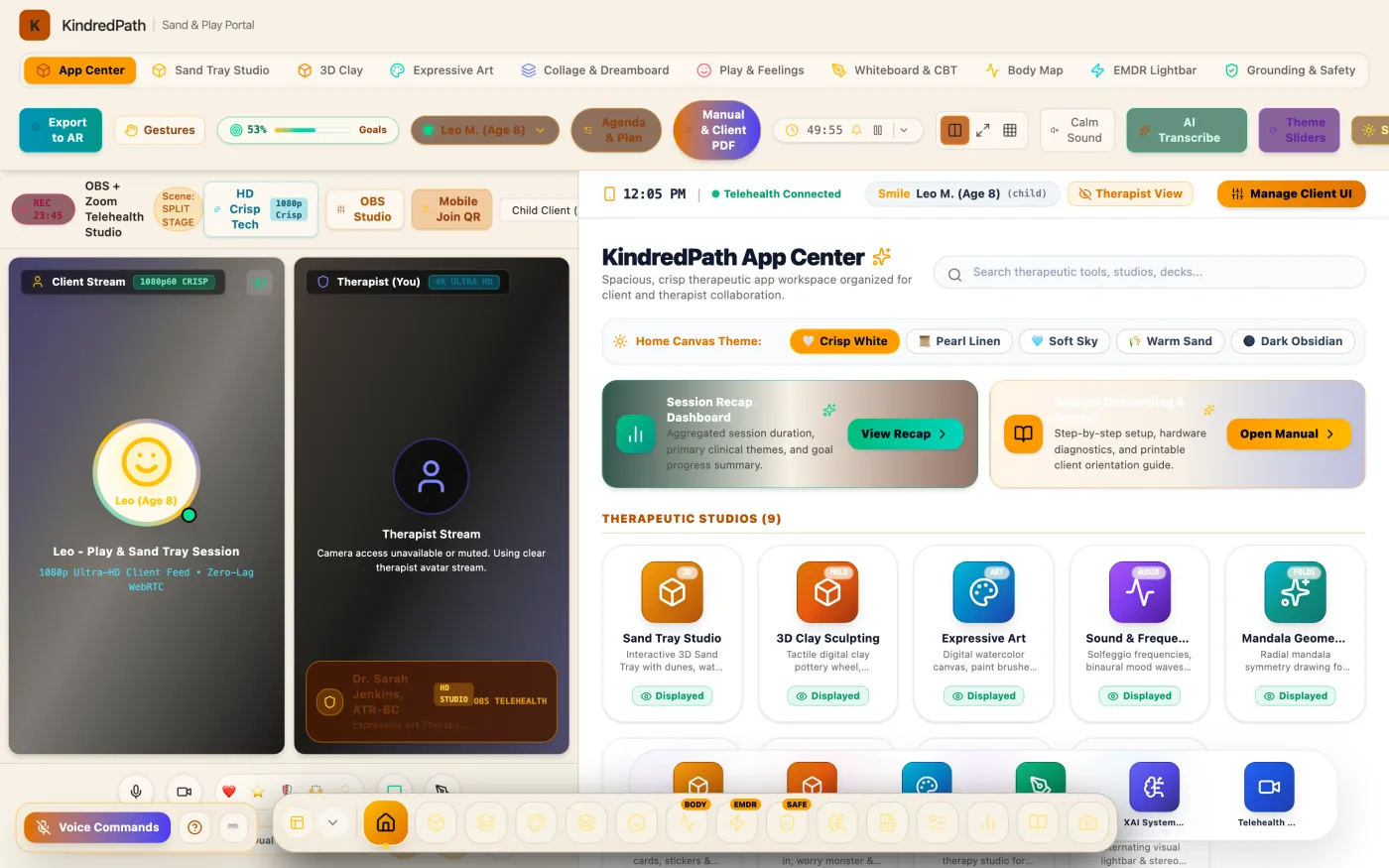
The App Center: the studio's own home screen listing every room.
The App Center All of it in one place, so you are choosing a room mid-session rather than hunting for a menu.

What it does not do.

It does not read anyone's pulse, breathing or stress level. There is no sensor attached to your client and nothing here estimates one. Where a number appears, something measured it — and where nothing measured it, the screen says so instead of drawing a chart.

It does not supply crisis services, hotlines or referrals. Those differ by country, by state and by year, and software that guesses them is wrong the moment it crosses a border. Your safety plan is yours to configure, for your licence and your jurisdiction.

It does not sign anything for you. A session document leaves the studio unsigned, with a blank line, until a clinician puts their own name on it.